Matte vs. Glossy Nails: Which Finish Actually Lasts Longer?
Glossy nails last longer than matte ones, and it isn’t close. A glossy top coat is built from flexible resins that bend with your natural nail, so it resists chips for five to seven days. Matte top coats use a rigid, flattening resin that cracks under the same flex, usually chipping in three to four days. The good news: you don’t have to choose blind. There’s a simple trick to get the matte look with glossy-level durability, and it takes one extra step.
What’s Actually Different Between Matte and Glossy Top Coats?
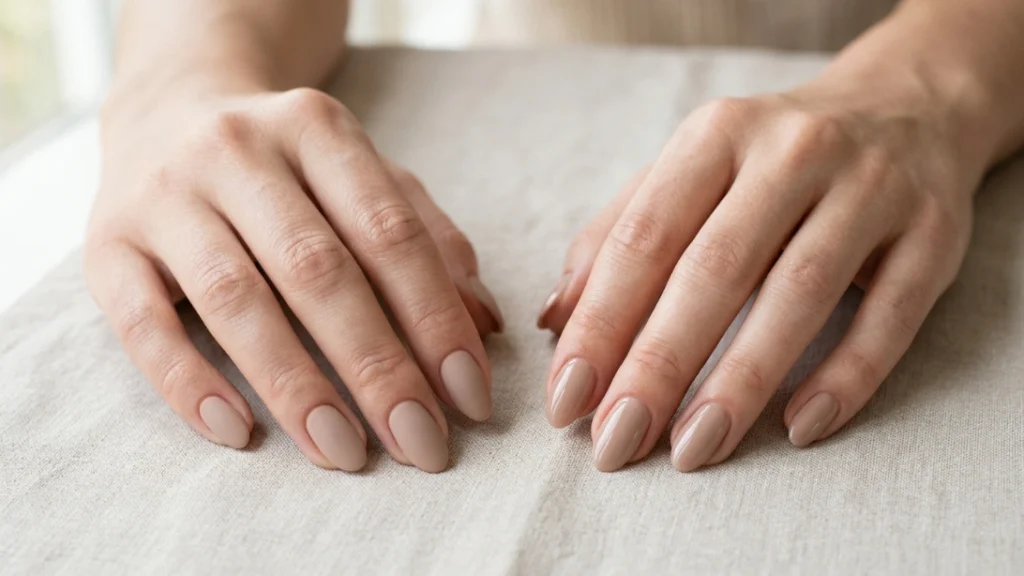
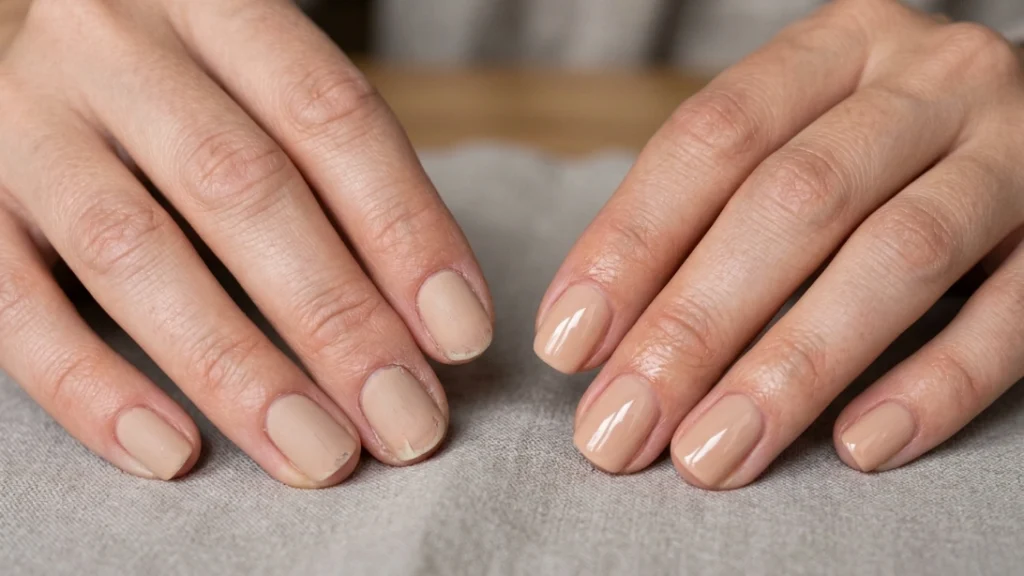
The color underneath can be identical. The difference lives entirely in the top coat’s finish. Glossy top coat is formulated with light-reflecting agents and flexible film-forming resins. The surface stays smooth, so light bounces off it evenly, which is what creates shine. Matte top coat contains tiny texturizing particles that scatter light instead of reflecting it. That’s what flattens the shine into a soft, velvety look.
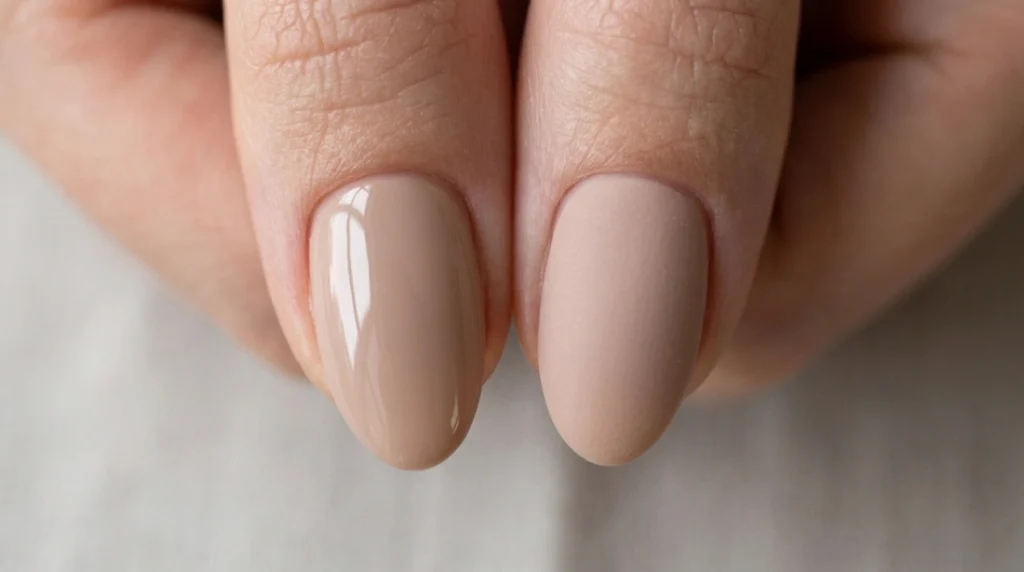
That texturizing difference isn’t just cosmetic. It’s also the entire reason one finish holds up better than the other.
Why Does Matte Nail Polish Chip Faster?
Flexible resins in glossy top coat move when your nail moves. Every time you type, open a jar, or bump a doorframe, your nail plate flexes slightly, and a glossy top coat flexes with it instead of cracking. Matte top coat is more rigid by formulation. It doesn’t move with the nail the same way, so repeated flexing creates micro-cracks at the tips and edges faster. Those cracks are what you see as chipping.
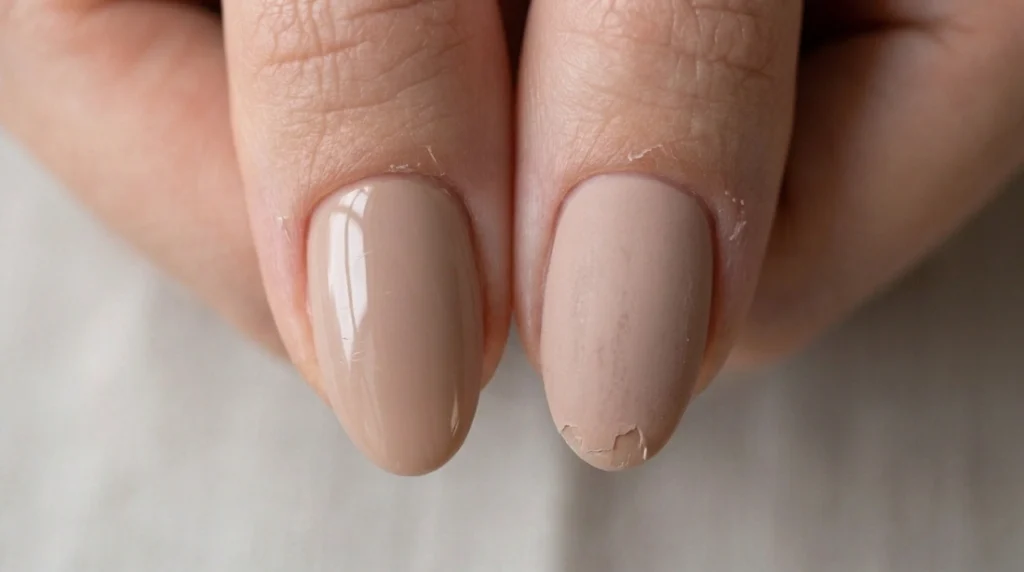
There’s a second factor working against matte: touch-ups are harder to hide. Because the surface doesn’t reflect light, any patch job, smudge, or uneven spot is fully visible instead of blending into the shine.
How Many Days Does Each Finish Actually Last?
Here’s the real range, based on regular lacquer with a proper base coat and two coats of color underneath.
| Finish | Average Wear Before Chipping | Best For | Upkeep Level |
|---|---|---|---|
| Glossy Top Coat | 5–7 days | Everyday wear, first-timers, active hands | Low |
| Matte Top Coat | 3–4 days | Editorial looks, short-term events, photos | High |
| Gel + Glossy | 10–14 days | Long-term wear, low touch-up tolerance | Very Low |
| Gel + Matte | 7–9 days | Special occasions with gel durability | Medium |
Gel versions of both finishes last longer across the board, since the UV-cured formula is more rigid overall than air-dry lacquer, but the same matte-versus-glossy gap still holds true even with gel.
The Fix: How to Get Matte Nails That Last Like Glossy Ones
You don’t have to give up the matte look to get better durability. The trick is sealing a glossy top coat underneath the matte one instead of skipping it.
Step 1: Apply Your Color as Normal
Two thin coats of your chosen polish, letting each coat dry fully before the next.
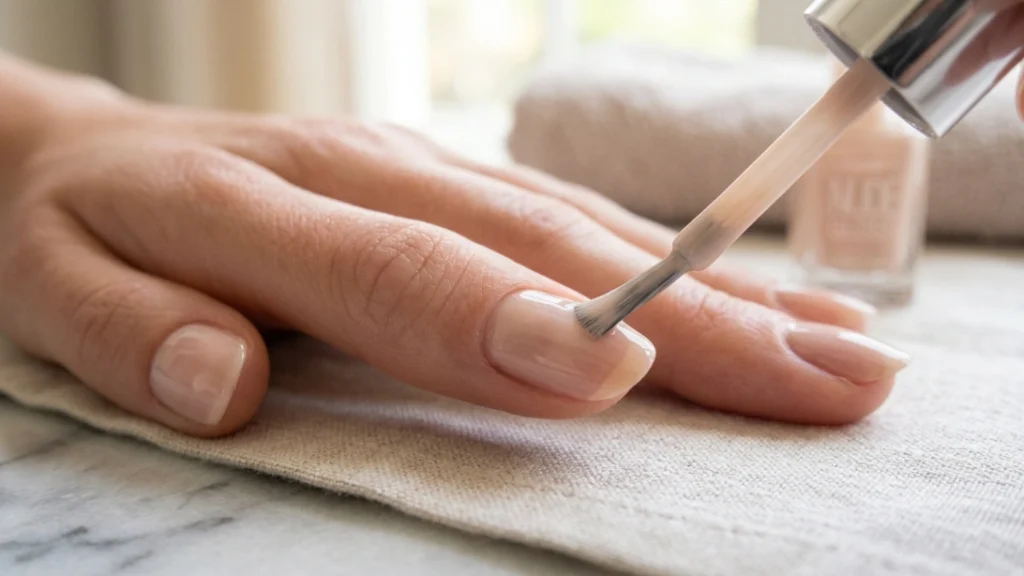
Step 2: Seal With a Glossy Top Coat First
This is the step almost every matte tutorial skips. Apply one thin layer of a regular glossy top coat over the dry color and let it cure completely.
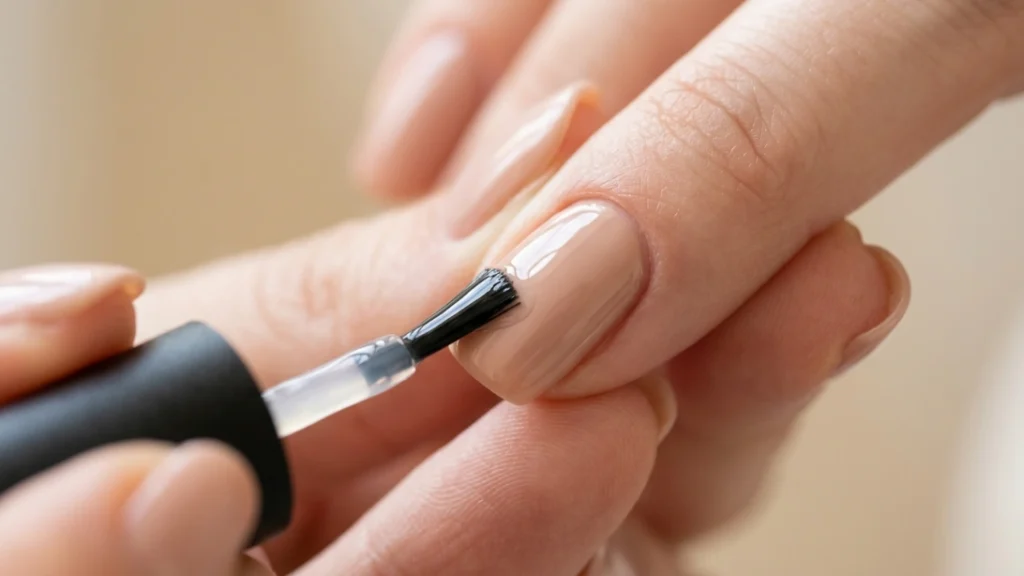
Step 3: Apply the Matte Top Coat Over It
Once the glossy layer is fully dry, brush on your matte top coat in one thin, even layer.
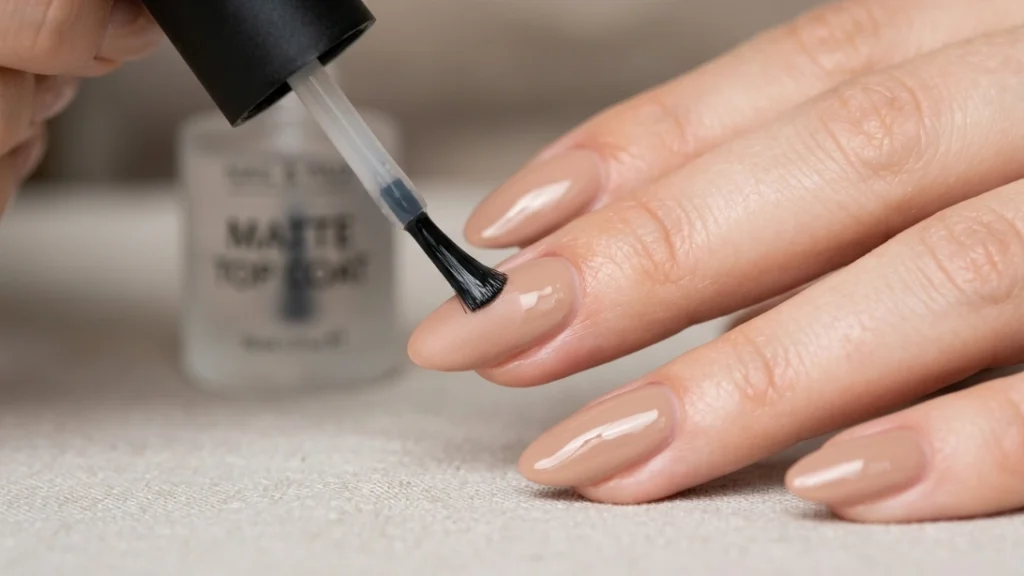
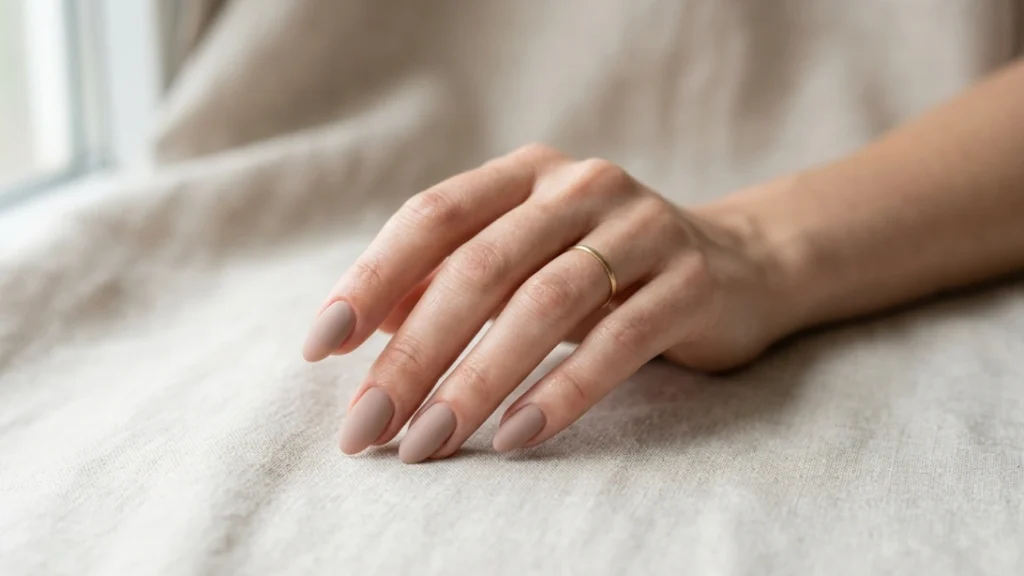
My honest take: I skipped the glossy sealing step the first time I tried a matte manicure, thinking it would ruin the flat finish. It didn’t change the look at all once the matte top coat went on top, and that one manicure lasted six days instead of the usual three. It’s the single easiest fix in this entire post, and it’s the one detail most matte tutorials leave out entirely.
Which Finish Should You Actually Choose?
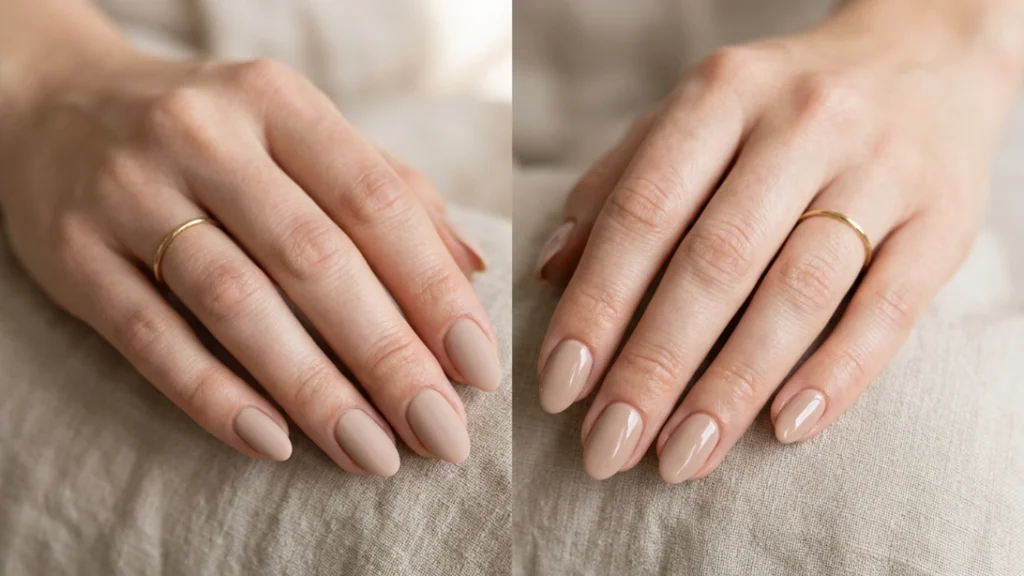
Pick glossy if you want the lowest-maintenance option, you’re prone to chipping quickly, or your polish has any texture, ridges, or glitter you’d rather have smoothed over instead of highlighted. Pick matte if the velvety, non-reflective look matters more to you than wear time, especially for short-term events, photos, or a specific editorial style. Pick the sealed-glossy-under-matte method above if you genuinely want both.
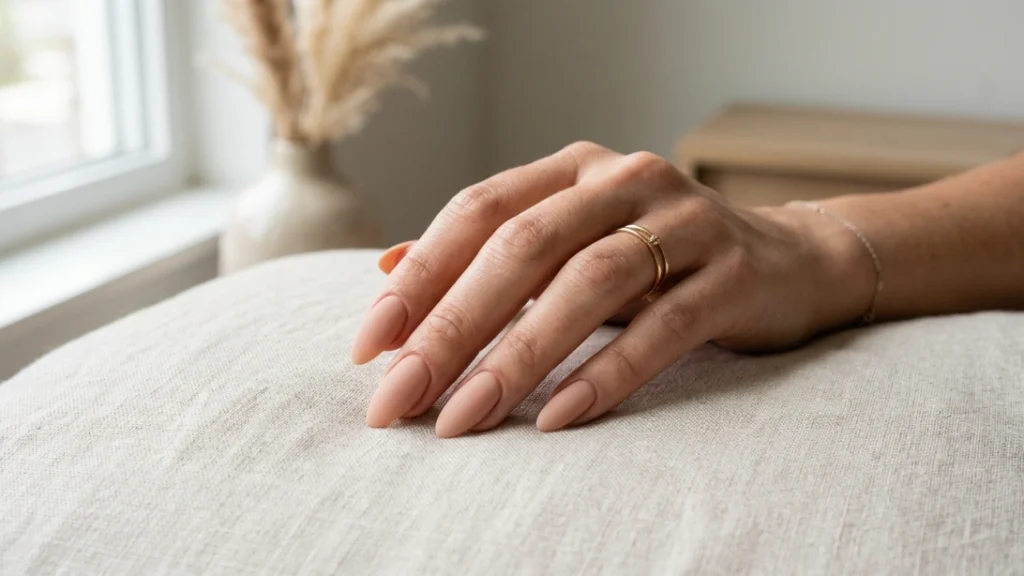
Common Mistakes That Shorten Either Finish’s Wear Time
Skipping the base coat entirely. This affects both finishes equally. A base coat protects the nail from staining and gives the color something to grip, so polish without one lifts and chips sooner regardless of top coat choice.
Applying top coat too thin or too thick. A top coat that’s too thin won’t seal the edges properly. One that’s too thick takes longer to dry and is more likely to smudge before it sets.
Not sealing the free edge. Whichever finish you use, dragging your top coat brush over the very tip of the nail — the exposed edge — closes the entry point where chips usually start first.
Using an old or thickened matte top coat. Matte formulas thicken with age faster than glossy ones. An old bottle applies unevenly and chips almost immediately, so replace matte top coat more often than glossy.
Quick FAQ
Can you turn a glossy manicure matte without redoing it? Yes. Apply a thin layer of matte top coat directly over your existing dry glossy manicure. It converts the finish in minutes without removing any polish underneath.
Does matte top coat work over gel polish? Yes, and it holds up better than over regular lacquer since gel is more rigid overall. Cure it under the same UV or LED lamp used for the rest of the manicure.
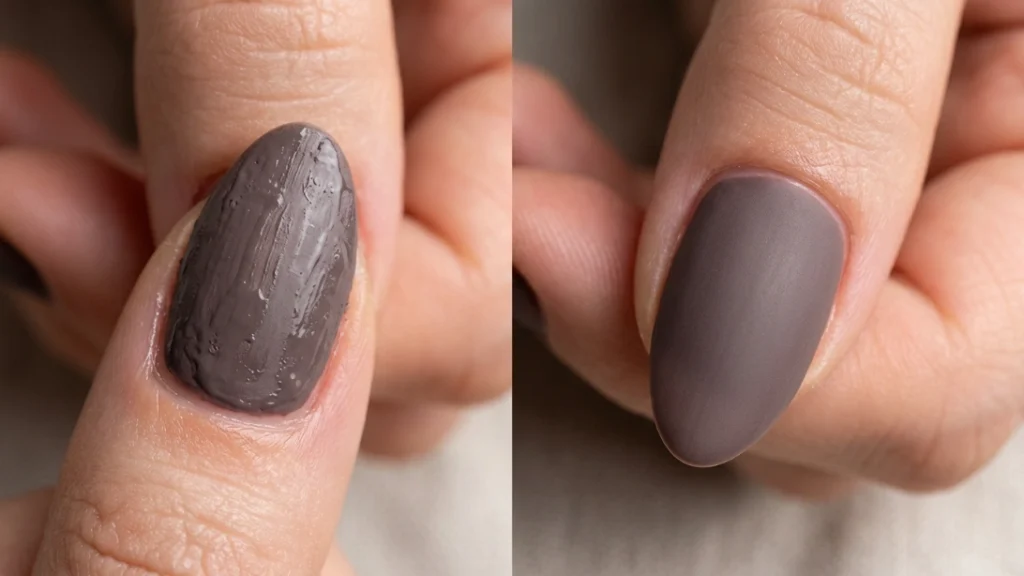
Why does my matte polish look patchy instead of smooth? This usually means the top coat went on too thick, or it was applied before the color coat fully dried. Thin, even layers over completely dry color fix this every time.
Before You Choose: A Quick Note on Nail Health
Neither finish is inherently better for nail health — the risk comes from removal, not the top coat itself. The American Academy of Dermatology recommends (dofollow, external authority link) limiting frequent acetone-based removal, since it dries out the nail plate and surrounding skin over repeated use regardless of whether your last manicure was matte or glossy.
Want to go deeper on keeping either finish intact longer? Our nail care tips guide covers general polish longevity in more depth.
Glossy wins on raw durability, matte wins on look — and now you don’t have to pick just one. Seal a glossy layer underneath, keep your top coat fresh, and cap the free edge every time, and either finish will hold up longer than you’re used to.
2 Comments