
Crimson Red Nails: What the Color Really Is and How to Wear It
Crimson red nails are a cool-leaning red: deep, saturated, and slightly blue, sitting between true red and raspberry. The standard web crimson is hex #DC143C, a hue about 12 degrees toward pink from pure red, which is why it looks richer than a fire-engine red and brighter than burgundy. If you have ever compared two bottles both labeled crimson and wondered why they look nothing alike, this guide explains the difference and helps you pick the right one.
What color is crimson red, exactly?
Crimson is a rich, deep red that inclines toward purple, according to Wikipedia’s entry on the color. The word began as a dye term. It originally named the color of kermes dye, made from the scale insect Kermes vermilio, and it traces back to the Arabic word qirmizi, meaning red.
The numbers are more useful than the history when you are shopping for crimson red nails. Web crimson is RGB 220, 20, 60, which means almost no green and a small but real dose of blue. That slight blue push is the whole personality of crimson red nails: they look cooler and more jewel-like than an orange-leaning red, even though the shade is still unmistakably red.
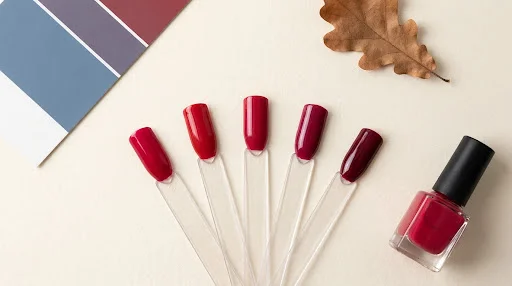
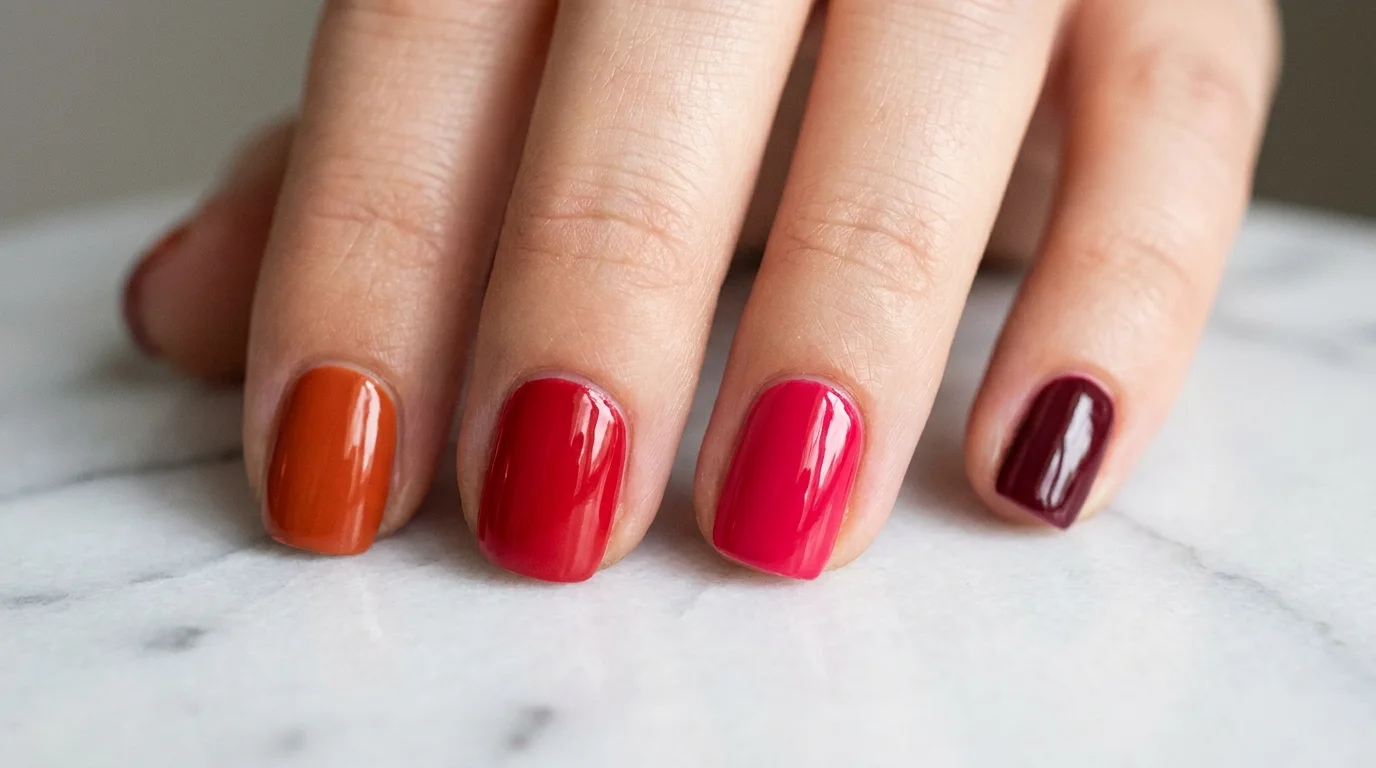
One catch is that nail brands stretch the word. The tone chart on Simple English Wikipedia shows how wide the crimson family runs, from a bright #E32636 for alizarin crimson down to #AD1C42 for Pantone’s deep crimson. A bottle named crimson can therefore be vivid or nearly wine, so swatching in person matters more than trusting the name on the label.
How are crimson red nails different from scarlet, cherry, and burgundy?
Red names blur together online, so here is the comparison in one place. The hex values come from the same tone chart, and the descriptions are about how each shade behaves on a nail rather than how it looks on a screen.
| Shade | Where it sits | How it looks on nails |
|---|---|---|
Crimson (#DC143C) | Blue-leaning, vivid red | Rich and cool, bright with no orange |
| Scarlet | Warmer, leans orange | Louder, closer to a fire-engine pop |
Cherry red (#FF0047) | Brighter and pinker | Glossy, fresh, a little playful |
| Burgundy | Darker, blue-purple undertone | Moody and wine-like, near black in dim light |
Crimson sits in the middle of that range, which makes it the most forgiving red to start with. If your bottle looks closer to wine than to red when you tilt it toward a window, it belongs with burgundy nails instead. Our rule of thumb is simple: if the polish reads orange against your skin it is scarlet, and if it turns brown or purple in low light it is burgundy. Whatever stays clearly red in both lights is crimson, and that is the shade true crimson red nails depend on.
Who looks best in crimson red nails?
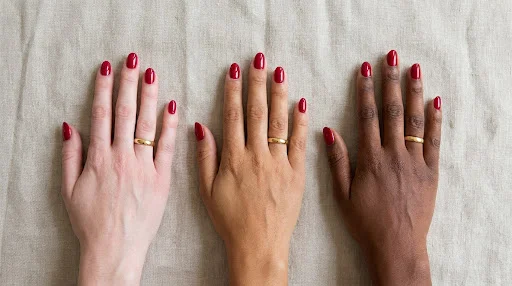
Online advice contradicts itself on this point. One guide tells fair skin to go bright while another tells the same skin to go dark, so the useful variable is undertone, not depth. Blue-based reds flatter cool undertones, while warm undertones usually look best in a crimson at the brighter, less purple end of the range.
A quick way to check is to look at the veins on your wrist in natural light. Blue or purple veins suggest a cool undertone, green veins suggest a warm one, and a mix means neutral. Neutral undertones can wear almost any crimson, which is one more reason crimson red nails are the safest red to try first.
Depth matters too, just less than people think. A lighter, brighter crimson keeps fair skin from looking washed out, while a deeper crimson creates strong contrast on medium to deep skin tones. Still, no shade is off limits, and the best test is always a swatch on your own nail before you commit to a full manicure.
How do you apply crimson red nails so they look salon-clean?
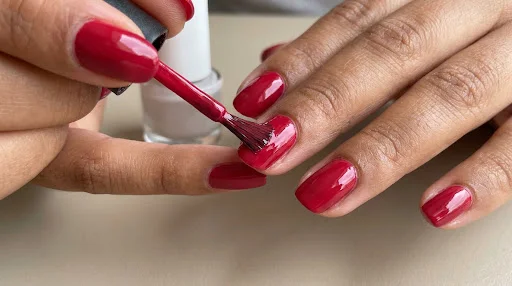
Red is a pigment-heavy color, so the base coat is not optional. A thin base coat protects bare nails from staining and gives the color something to grip. Two thin coats of crimson then beat one thick coat every time, because a heavy layer of a saturated red tends to streak and stay tacky. Cap the free edge of the nail with each coat to seal the tip and slow chipping.
Cleanup is where crimson red nails go from homemade to polished. Dip a small angled brush in remover and trace the cuticle line while the polish is still slightly soft. Finish with a glossy top coat, since shine is what makes crimson look deep rather than flat.
A short safety note belongs here as well. According to the FDA’s nail care products page, some polishes contain a resin called toluene sulfonamide/formaldehyde resin, and some people may become allergic to it. If your nails or the skin around them react, switch products and check the ingredient label next time. For prep and removal routines that protect your nails between manicures, our nail care tips walk through the basics.

Which finish and shape suit crimson red nails?
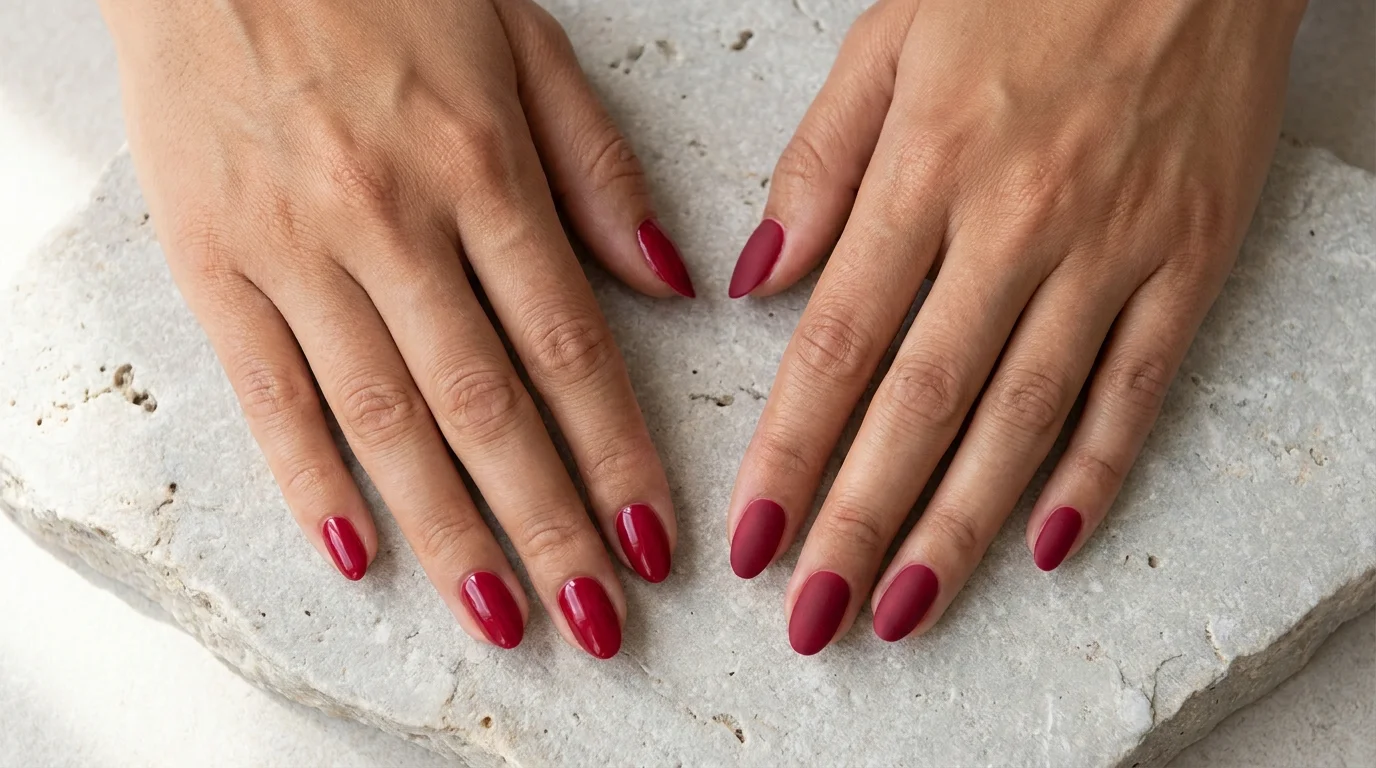
Finish changes the mood more than the shade does. A glossy cream is the classic and the easiest to get right. A sheer jelly version softens the color for anyone who finds full-coverage red heavy, and a matte top coat turns the same polish into something velvety and a little darker. Magnetic cat-eye gels also suit crimson red nails well, because the shifting line catches light against a deep base.
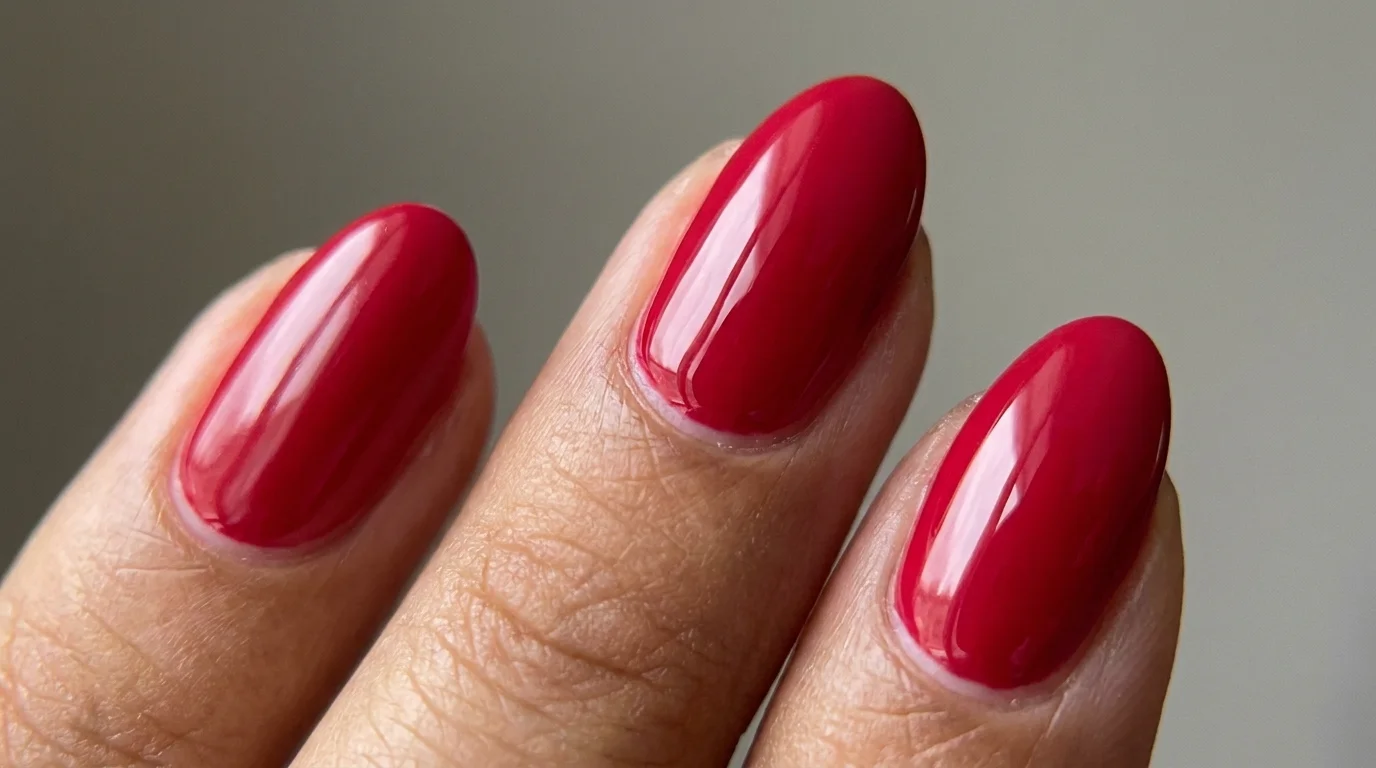
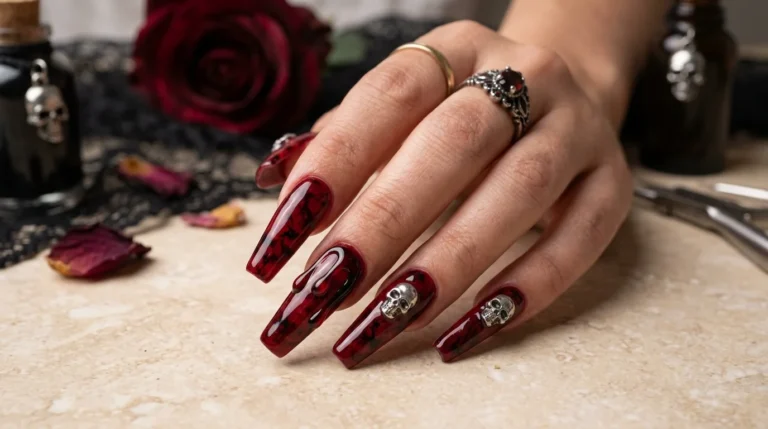
Shape works hand in hand with length. Short almond and squoval shapes make crimson red nails feel modern and low-maintenance, while longer coffin shapes give the color more canvas for accents. A single gold foil accent or a thin crimson French tip is an easy way to dress the look up without overcomplicating it. For more ideas in this color family, browse our red nails collection.
When do crimson red nails make sense?
Crimson red nails are an all-season color, which is a big part of their value. In winter they read festive without committing to holiday motifs, and in spring they look sharp against pastel clothing. In summer a glossy crimson on tanned skin looks confident, and in autumn it sits comfortably next to camel, olive, and chocolate brown.
At work, a short glossy crimson manicure signals polish rather than party. For weddings and evening events, a deeper crimson pairs well with gold jewelry and satin fabrics. Because the color is not tied to one calendar moment, crimson red nails earn their place in a rotation instead of a single seasonal slot.
Quick answers about crimson red nails
What is crimson red nail polish?
Crimson red nail polish is a vivid, blue-leaning red that sits between true red and raspberry. Most brands label a bottle crimson when the shade looks cool and saturated rather than orange or brown.
Is crimson red the same as burgundy?
No. Crimson is brighter and stays clearly red, while burgundy is darker with a blue-purple undertone. If the polish looks like red wine in dim light, it is burgundy.
What colors go with crimson red nails?
Gold, cream, soft white, nude, and black all work well. Gold and cream keep the look classic, while black adds drama and nude keeps accent nails quiet.
Are crimson red nails good for short nails?
Yes. Crimson red nails look sharp on short almond and squoval shapes, and the saturated color makes short natural nails look deliberate and well groomed.
The short version
Crimson is the red you reach for when orange reds feel too loud and burgundy feels too heavy. Check the undertone, apply thin coats over a base coat, and seal with a glossy top coat. Do that, and crimson red nails will look expensive on a short nail or a long one.
Related Guides
- Burgundy nails: the darker, wine-toned cousin to compare against crimson.
- Red nails collection: every red shade on the site, from cherry to vampy.
- Nail care tips: prep, base coat, and removal habits that keep nails healthy under dark polish.