Serious Nail Symptoms You Should Never Ignore
Most nail changes are completely harmless, a chip from opening a can, a ridge from a dry winter, a bruise from stubbing a toe. But nails are also one of the more honest windows into what’s happening inside the body, and a small number of specific signs of nail damage to watch for genuinely warrant a conversation with a doctor rather than a new bottle of cuticle oil.
This isn’t a list meant to cause alarm over every imperfection. It’s a clear, practical guide to the handful of changes that actually matter, what they can indicate, and when it’s time to stop guessing and get a professional opinion.
Nothing here is a diagnosis, and nothing here replaces an actual medical exam. Think of this as the difference between “that looks a little different” and “that’s worth a phone call,” so you know which category a given change actually falls into.
Why Nails Reflect More Than Just Nail Health
Understanding the signs of nail damage to watch for starts with understanding why nails change in the first place.
The nail plate grows from a small area at the base called the matrix, and that growth process is sensitive to almost everything happening in the body, nutrition, circulation, hormone levels, and underlying illness all leave a visible signature as the nail grows out. That’s part of why dermatologists and primary care doctors both pay attention to nails during a routine exam, they’re a genuinely useful external clue, even though most of what shows up there turns out to be minor.
Nail Clubbing
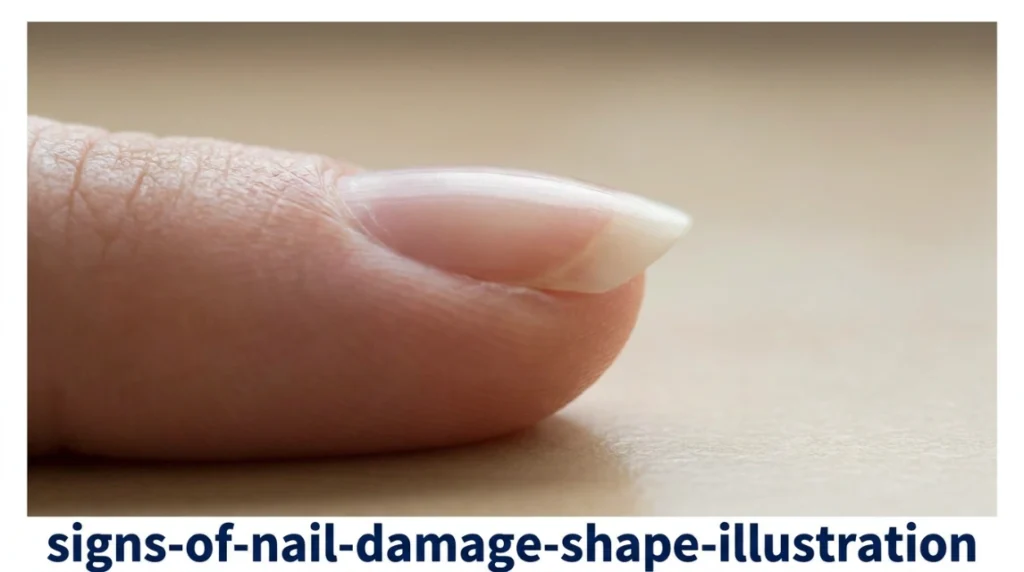
Clubbing describes a nail that gradually becomes more rounded and bulbous, with the fingertip itself appearing wider and the angle where the nail meets the skin flattening out or even reversing. It develops slowly, often over months, which is part of why it’s easy to miss in yourself but more obvious to someone who hasn’t seen your hands in a while.
Clubbing is associated with a range of underlying conditions, most notably chronic lung disease, certain heart conditions, and some gastrointestinal or liver conditions. It isn’t something that shows up from an injury or a bad manicure, and if you notice this specific rounded, bulbous change developing gradually, it’s worth bringing up with a doctor rather than a nail technician.
Koilonychia, or Spoon Nails
Spoon nails curve upward at the edges, creating a concave shape that can actually hold a drop of water, the opposite of the natural gentle curve a healthy nail has. This is one of the more well-documented nail signs tied to iron deficiency anemia, though it can also show up with certain thyroid conditions or, less commonly, from repeated trauma or occupational exposure to certain chemicals.
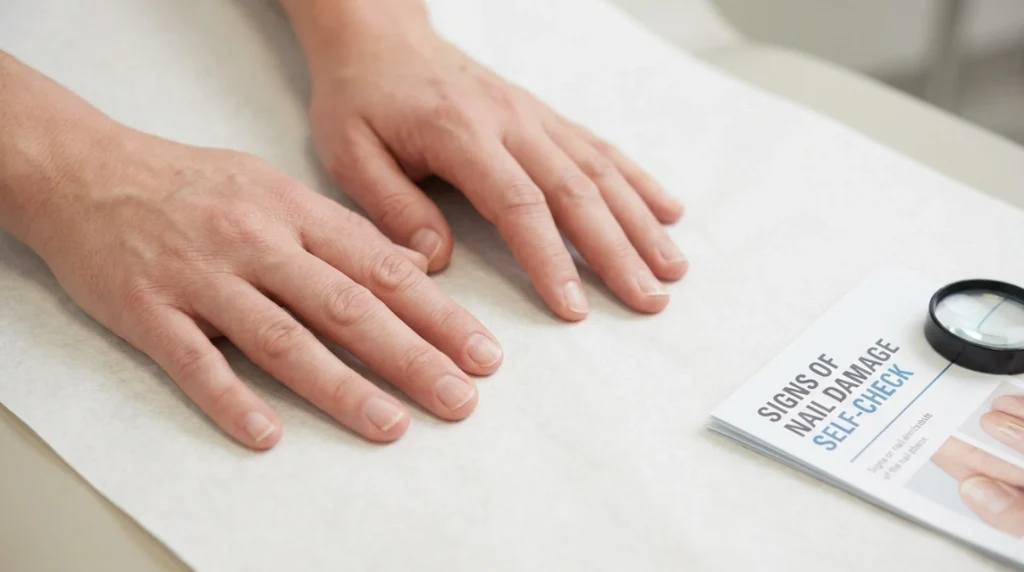
If you notice this shape developing, especially alongside fatigue, pale skin, or other signs of anemia, it’s a reasonable prompt to ask your doctor about a simple blood test rather than something to try to style around.
Nail Pitting
Small, shallow depressions scattered across the nail surface, nail pitting, are most strongly associated with psoriasis, even in people who don’t have visible skin psoriasis anywhere else on their body. Pitting can also show up with alopecia areata and a few other inflammatory skin conditions.
Occasional, very mild pitting on one or two nails isn’t automatically a red flag, but pitting that’s widespread, persistent, or paired with other nail changes like thickening or separation from the nail bed is worth a dermatologist’s evaluation, since it can be one of the earlier visible signs of psoriasis before it shows up anywhere else.
Beau’s Lines
Beau’s lines are horizontal grooves or depressions running across the width of the nail, essentially a pause in the nail’s normal growth pattern. They can affect a single nail after a localized injury, or multiple nails at once when the cause is systemic, a severe illness, a high fever, certain medications, or significant physical stress on the body.
Because nails grow slowly, a Beau’s line often shows up as a visible record of something that happened weeks or months earlier, which makes it a genuinely interesting diagnostic clue for a doctor trying to piece together a timeline, even though the line itself isn’t dangerous. If Beau’s lines appear across several nails at once without an obvious cause like a recent illness, mentioning it at your next checkup is reasonable.
Skin Growing Under the Fingernail (Pterygium)
Pterygium describes skin that extends forward and attaches to the underside of the nail plate, sometimes splitting the nail itself as it grows. It can result from injury, certain inflammatory skin conditions like lichen planus, or reduced blood flow to the area in some cases.
This is a change worth having examined rather than trimmed or ignored, since the underlying cause ranges from a one-time injury that resolves on its own to a chronic condition that benefits from active treatment.
Melanoma on the Finger: What It Actually Looks Like
This is the single most important item on this list to understand clearly, since it’s the one with the highest stakes and the most commonly missed early warning sign. Subungual melanoma, melanoma occurring under the nail, most often appears as a dark brown or black vertical band running the length of the nail, from the base near the cuticle out to the tip. What separates a concerning band from a harmless one is change over time, a band that widens, develops irregular or blurred edges, or varies in color across its width is the pattern doctors watch for most closely.
One especially important detail: if that dark pigment spreads beyond the nail itself onto the surrounding skin at the cuticle, a pattern called Hutchinson’s sign, this is considered a significant warning sign that warrants prompt medical attention rather than a wait-and-see approach. Other signs worth flagging to a doctor include a new dark spot under the nail with no clear cause, persistent swelling or tenderness around a nail without an obvious injury, or unexplained bleeding under the nail that doesn’t fade the way a normal bruise would over a couple of weeks.
It’s worth saying plainly: most dark marks under a nail are not melanoma. Trauma, certain medications, and normal pigment variation, especially in people with darker skin tones, can all cause benign dark streaks. But because subungual melanoma is genuinely easy to mistake for a bruise or a fungal infection in its early stages, any new or changing dark band is worth a dermatologist’s direct evaluation rather than a guess based on a photo comparison online.
When to See a Dermatologist for Fingernail Fungus
Fungal nail infections typically start as a small area of white or yellow discoloration under the tip of the nail, gradually spreading and often bringing along thickening, crumbling, or a distorted nail shape as the infection progresses. Mild, early cases are sometimes manageable with over-the-counter antifungal treatments, but a few situations genuinely call for a professional evaluation rather than continued self-treatment: infections that haven’t improved after several weeks of consistent over-the-counter treatment, infections in someone with diabetes or a compromised immune system, significant pain or spreading redness around the nail, or uncertainty about whether the discoloration is actually fungal at all rather than something else entirely, including the melanoma warning signs described above.
A dermatologist can confirm a fungal diagnosis with a simple sample test, which matters because prescription antifungal treatment is considerably more effective than over-the-counter options for infections that have progressed past the earliest stage.
What Nail Health Problems Can Say About Heart and Systemic Health
A few nail changes are specifically associated with cardiovascular and systemic conditions, and it’s worth knowing the general categories even without memorizing every specific term. Pale or white nail beds can be associated with anemia or, less commonly, liver conditions. A bluish tint to the nail bed can indicate low oxygen levels in the blood, sometimes tied to heart or lung conditions. Small, splinter-like red or brown lines running vertically under the nail, splinter hemorrhages, are usually caused by minor trauma but have also been associated with certain heart valve infections in specific clinical contexts, which is why a doctor evaluating unexplained splinter hemorrhages will often ask about other symptoms before drawing any conclusions.
None of these signs are diagnostic on their own, and plenty of harmless explanations exist for each one. The pattern worth paying attention to is a nail change that’s new, that persists, or that shows up alongside other symptoms like fatigue, shortness of breath, or unexplained swelling, since that combination is what actually prompts a doctor to investigate further rather than any single nail observation in isolation.
Is Gel Nail Polish Bad for Your Nails?
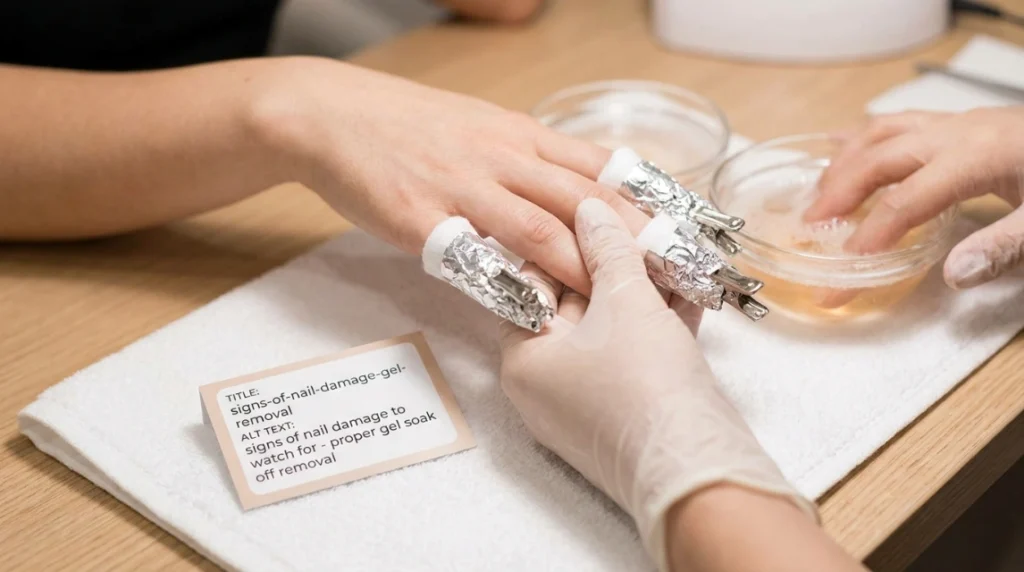
This is a genuinely common concern, and the honest answer is more nuanced than a flat yes or no. Gel polish itself isn’t inherently damaging when applied and removed correctly. The real risk comes from repeated improper removal, peeling or picking off gel rather than soaking it away, which strips healthy layers of the nail plate along with the product and is the actual source of most of the thinning and weakness people associate with long-term gel wear. Giving nails an occasional break between gel sets and insisting on proper soak-off removal every time addresses most of the legitimate concern here.
When a Nail Change Is Just Normal Wear and Tear
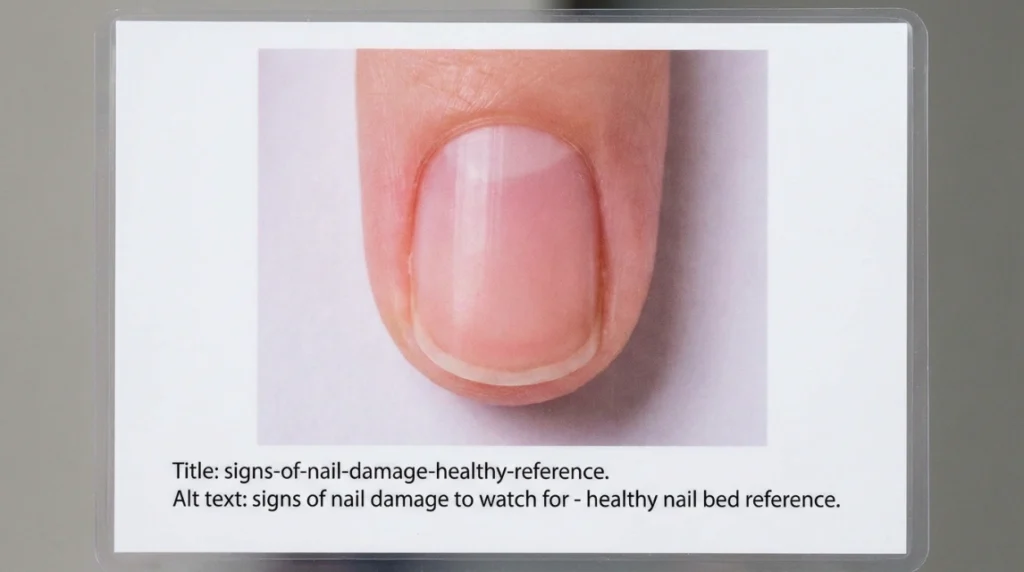
Most of what shows up on nails day to day doesn’t belong on this list of signs of nail damage to watch for at all. Vertical ridges that become more pronounced with age are extremely common and not a health concern on their own. A single white spot from a minor bump, mild dryness after a lot of hand-washing, or a nail that grows out slightly uneven after a hard knock are all normal, self-resolving events.
The signs above stand out specifically because they involve a genuine pattern, gradual shape change, a spreading or widening dark band, symptoms affecting multiple nails at once, rather than a one-off, explainable event on a single nail.

Quick FAQ
How do I know if a dark line under my nail is dangerous or harmless? This is one of the most common questions people have about the signs of nail damage to watch for. The most important factors are whether it’s new, whether it’s changing (widening, spreading, or shifting in color), and whether it’s spreading onto the surrounding skin.
Can nail changes really indicate heart problems? Certain nail changes, including clubbing and some color changes, are associated with heart and lung conditions, though they’re never diagnostic on their own and always considered alongside other symptoms by a doctor.
Is it normal for one nail to look different from the others? Occasionally, yes, especially after a localized injury. What’s more concerning is a change affecting multiple nails at once, or a single nail showing a progressive change over several weeks rather than a one-time event.
According to MedlinePlus’s overview of nail abnormalities, changes in nail shape, color, and texture can reflect a wide range of underlying causes, from simple nutritional gaps to more significant systemic conditions, which is exactly why persistent or unexplained nail changes are worth mentioning to a healthcare provider rather than researching alone.
The American Academy of Dermatology’s guide to checking your nails for melanoma offers detailed visual guidance on the warning signs described above, and Mayo Clinic’s overview of nail fungus symptoms and treatment covers the fungal infection pathway in more depth if that’s the specific concern bringing you here. Our own nail care tips page and healthy nails guide cover the everyday maintenance side of nail health once you’ve ruled out anything more serious.
This article is for general information only and isn’t a substitute for professional medical advice, diagnosis, or treatment. If you’re concerned about any nail change, especially anything resembling the warning signs described above, please consult a doctor or dermatologist directly.