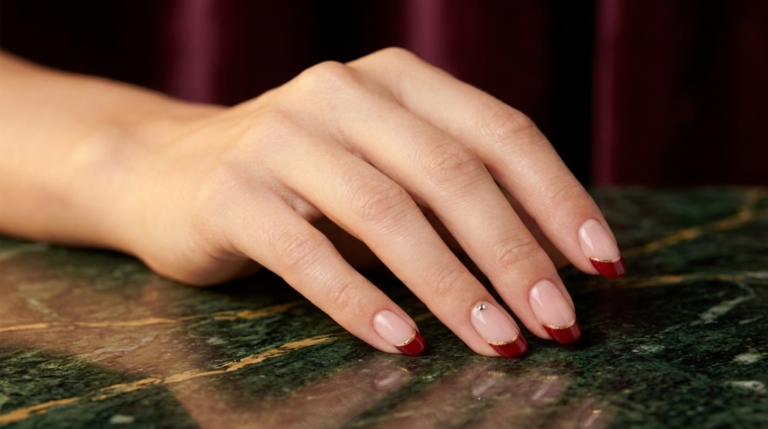
Milky Nails vs. Babyboomer Nails: What’s Actually Different
You bring your tech a screenshot captioned “milky nails,” and she looks at it for two seconds and says, “that’s actually a babyboomer.” You were not wrong to be confused. In a small thumbnail, both looks are soft, pale, and vaguely French-adjacent, and plenty of Pinterest boards mix them into the same pin cluster without ever separating them.
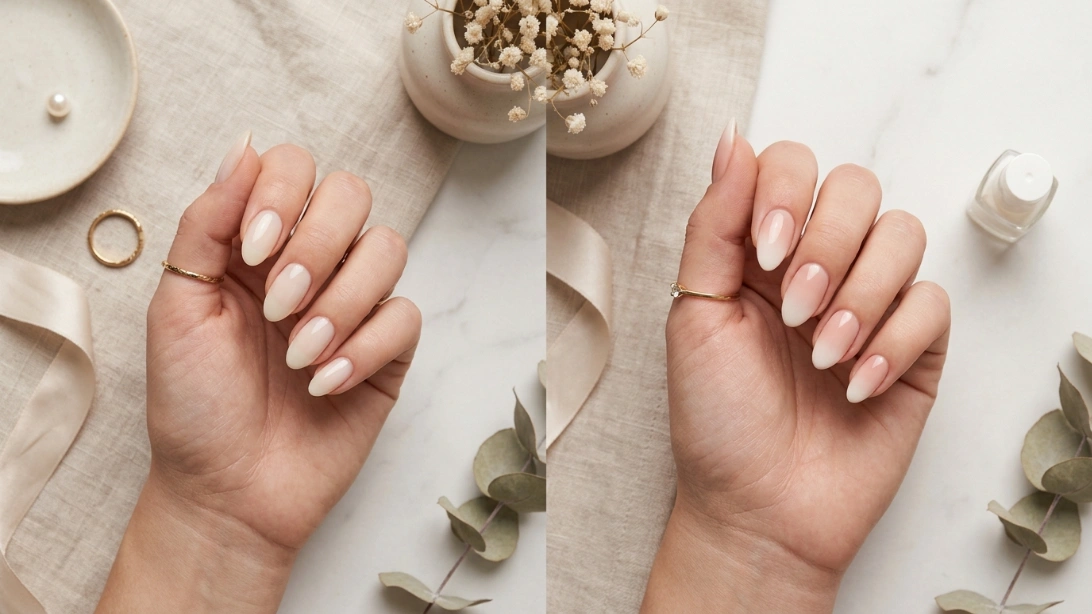
Here’s the actual milky nails vs babyboomer answer, in one sentence: milky nails are one uniform sheer shade across the whole nail, while babyboomer nails are a blended gradient that fades from a nude or pink base into a white tip. Everything else about how each one looks, wears, and gets requested at the salon flows from that one structural difference.
Milky Nails vs. Babyboomer at a Glance
| Milky Nails | Babyboomer Nails | |
|---|---|---|
| Color structure | One sheer shade, whole nail | Nude/pink base fading into white tip |
| Visual effect | Soft, cloudy, uniform glow | Smooth gradient, no visible line |
| Closest relative | Soap nails, sheer polish | French manicure |
| Application method | Layered sheer polish coats | Sponge, airbrush, or dual-powder blending |
| Best for | Everyday minimal wear | A dressier, more structured look |
| At-home difficulty | Beginner-friendly | Moderate to advanced |
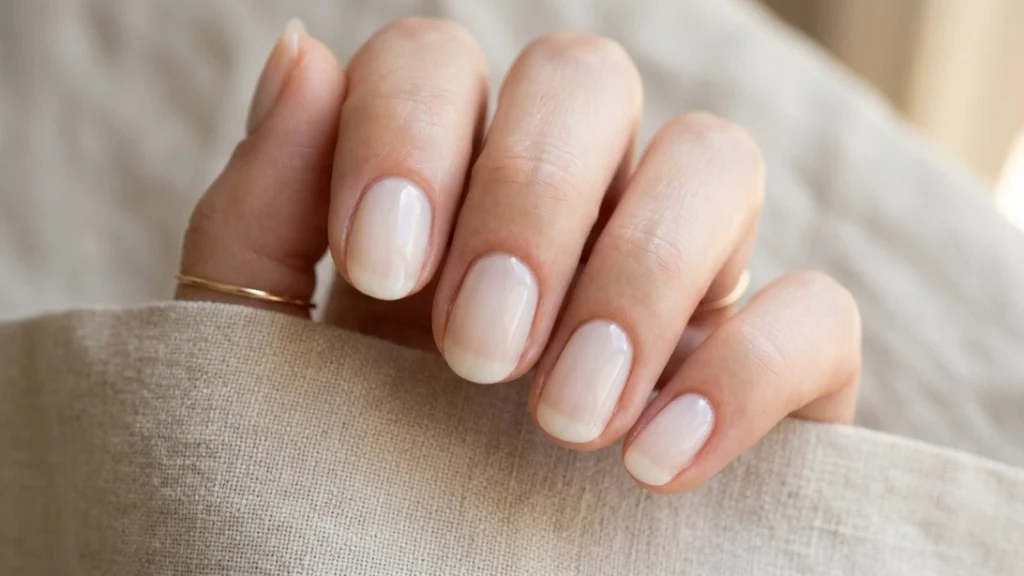
Neither one is a “better” version of the other. They’re solving two different visual problems, and once you can name which problem you’re actually trying to solve, the choice mostly makes itself. Most of the milky nails vs babyboomer confusion online comes from comparing photos rather than comparing technique, which is exactly the gap this guide is built to close.
Why the Confusion Happens So Easily
Both trends trace back to the same cultural moment: a broader shift away from bold, opaque color and toward soft, natural-looking nails that still feel finished. Milky nails and babyboomer nails both landed in that same “quiet luxury” wave, both photograph similarly under warm indoor lighting, and both get pinned under nearly identical caption language, which is exactly why so many searches for milky nails vs babyboomer come from people who’ve already saved five photos of each without realizing they were looking at two techniques.
The confusion gets worse in person. A tech who hears “milky” and a tech who hears “babyboomer” are picturing two completely different product setups before you’ve even sat down, which is precisely why naming the technique, not just describing the vibe, matters as much as it does here.
The One Structural Difference That Actually Separates Them
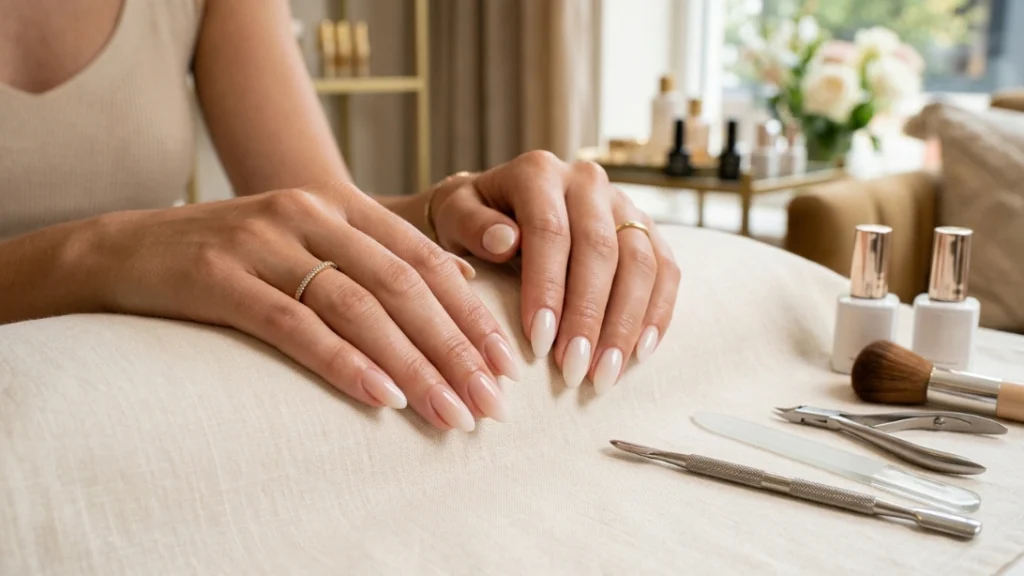
Milky nails come from color uniformity. A sheer white, off-white, or pastel polish gets layered in two to three thin coats across the entire nail, and the softness comes purely from how translucent that polish is, not from any variation in the shade itself. Every part of the nail reads the same tone, just diffused rather than solid.
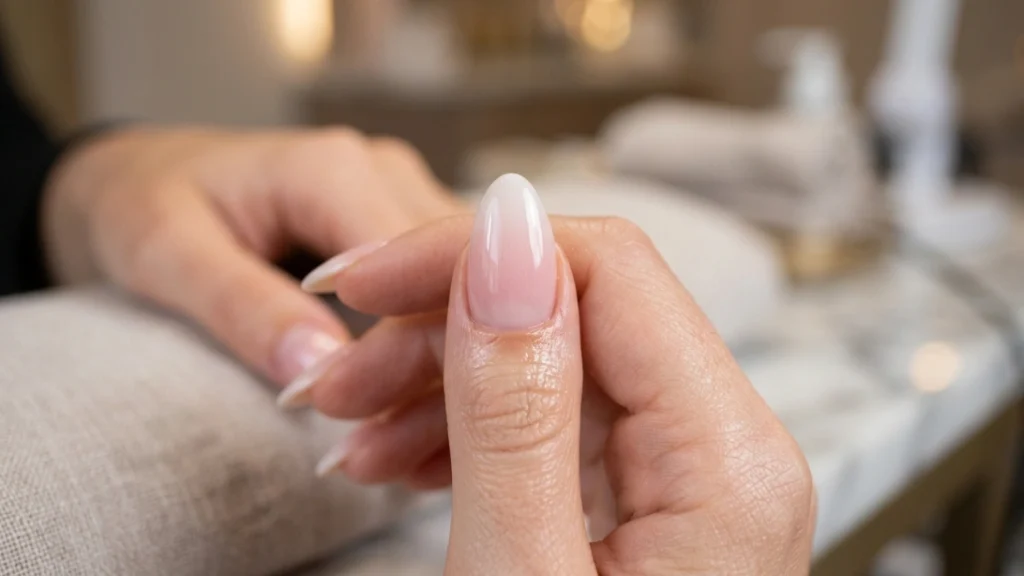
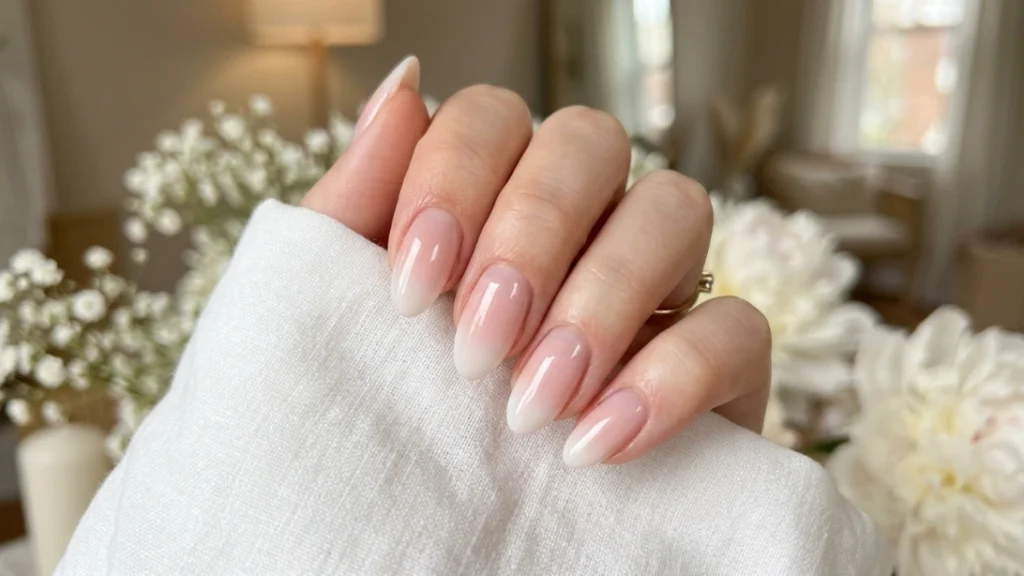
Babyboomer nails come from a gradient. The base near the cuticle sits in a nude or soft pink, the tip fades into white, and the entire point of the technique is making that transition disappear. A visible line between the two shades is considered a mistake, not a design choice. This is why babyboomer sits so much closer to a French manicure in spirit than milky ever does, it’s the French tip’s structure, just blurred into a fade rather than left as a crisp edge.
So if you remember only one thing from this milky nails vs babyboomer comparison: milky asks “is the color uniform,” babyboomer asks “does the color fade.” That single question sorts almost every photo you’ll ever be confused by, and it’s a far more reliable test than trying to eyeball the two side by side in a dim salon photo.
Which Shape Actually Suits Each One
This is the part most milky nails vs babyboomer comparisons skip entirely, and it’s genuinely useful before you book anything. Milky nails work on almost any shape because there’s no gradient zone that needs room to breathe, short round nails and long almond nails show the effect identically.
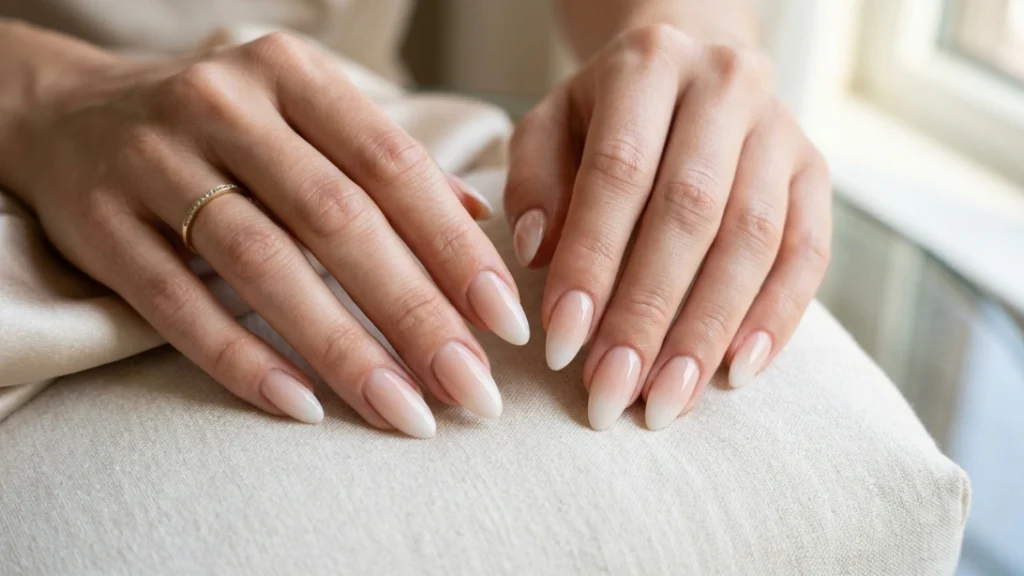
Babyboomer nails are pickier. The gradient needs enough nail length for the fade to read clearly, which is why almond and coffin shapes are consistently recommended over very short or very round ones. On a short square nail, the fade zone gets compressed into such a small space that it can start looking like a smudge rather than an intentional blend.
A Mix-Up I Actually Made Booking This
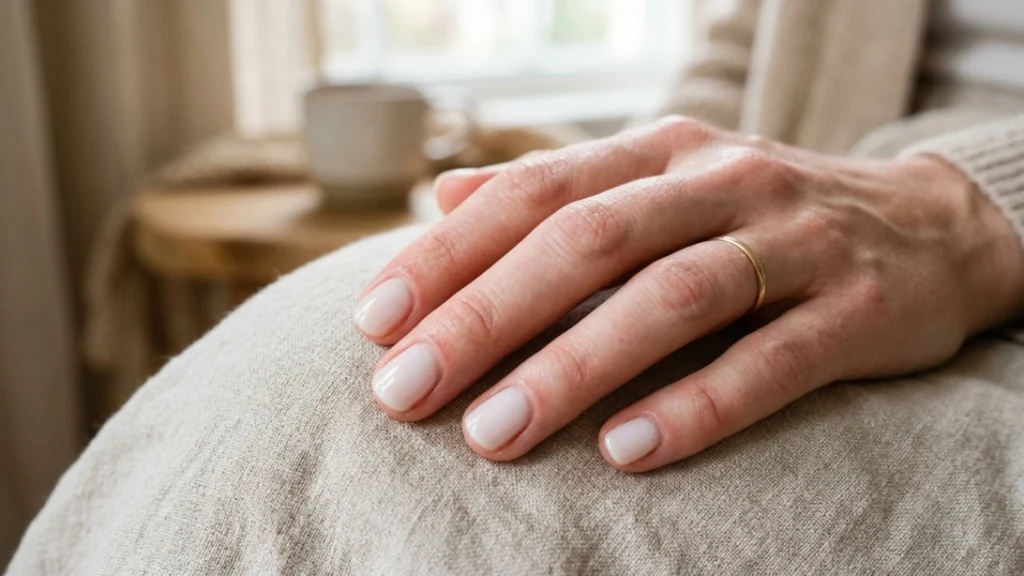
I once brought in a reference photo of a soft, gradient French look and asked for “milky nails” because that was the only term I knew at the time. My tech, reasonably, mixed up a plain sheer white set instead, no gradient at all. It wasn’t a bad manicure. It just wasn’t remotely what I’d pointed to in the photo, and it taught me that the word you say out loud matters more than the photo you hand over, since a tech is working from your language first and your reference second.
Which One Actually Lasts Longer
Both hold up well in gel form, generally landing in the two to three week range before a fill starts to matter. On the question of which lasts longer, milky or babyboomer, milky has a small practical edge for one specific reason: because the color is already sheer and diffused, small chips and early tip wear are far less visible against it than they would be against a solid shade.
Babyboomer’s weak point is regrowth at the base rather than chipping at the tip. Because the color near the cuticle is meant to look seamless with the nail itself, new growth is initially fairly forgiving, but once the gap becomes noticeable, it tends to look more obviously “grown out” than a milky set does at the same stage, simply because the babyboomer’s whole appeal depends on that base-to-tip blend staying intact.
How to Actually Ask for Each One at the Salon
For milky nails, say exactly that: “milky nails, one sheer shade across the whole nail, no gradient.” For babyboomer, be specific about the fade: “babyboomer nails, nude or pink base blending into a white tip, no visible line.” Naming the gradient specifically is the detail that prevents a tech from defaulting to a plain sheer set when what you actually wanted was the fade.
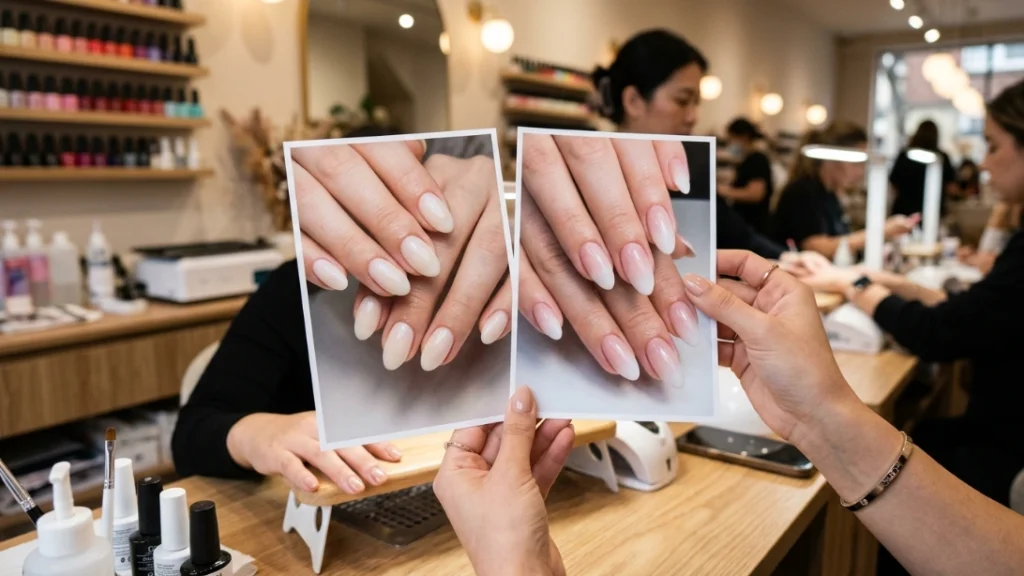
If you’re still not sure which one matches your reference photo, bringing one clear photo of each side by side and asking your tech to point at the one that matches is a completely reasonable way to settle it before any polish comes out.
Can You Combine the Two?
Yes, and it’s a genuinely popular combination right now. A babyboomer gradient finished with a milky top layer softens the fade even further, giving you the structure of a babyboomer with the diffused glow of a milky finish over top. If you like elements of both, there’s no rule that says you need to choose only one.
Which One Should You Actually Book
If your priority is something low-effort that photographs well on literally any shape and hides small chips without much upkeep, milky nails are the easier everyday pick. If you want something that reads a little more polished and structured, closer to a French manicure than a plain sheer color, and you’re working with almond or coffin length nails, babyboomer is worth the slightly longer salon appointment. There’s no wrong answer in the milky nails vs babyboomer decision, only the one that actually matches what you were picturing when you saved the photo in the first place.
According to Wikipedia’s overview of the manicure’s history, the gradient and two-tone tip styles that babyboomer nails descend from have roots going back decades within French manicure variations, which explains why this technique keeps resurfacing in new colors rather than disappearing after one trend cycle. For more on the sheer side of this comparison, our full milky nails vs glazed donut nails guide breaks down another closely related sheer technique in more depth, and our French nails guide covers additional gradient and tip variations if the babyboomer side is what caught your eye here.
Quick FAQ
Is babyboomer the same as French tips? No. A classic French tip has a crisp, visible line between the base and the white tip. Babyboomer removes that line entirely and replaces it with a smooth, gradual fade, making it a softer, more blended cousin of the French manicure rather than the same style.
Can milky nails and babyboomer nails be done on natural nails without extensions? Yes, both techniques work on natural, unextended nails as long as there’s enough length for the color to sit clearly, though babyboomer generally benefits from a bit more length than milky does for the gradient to read properly.
Which one is easier to do at home? Milky nails are considerably easier for a first attempt, since layering a single sheer polish evenly is far more forgiving than blending two shades into an invisible gradient by hand.