Colored French Tips: 5 Modern Twists on the Classic
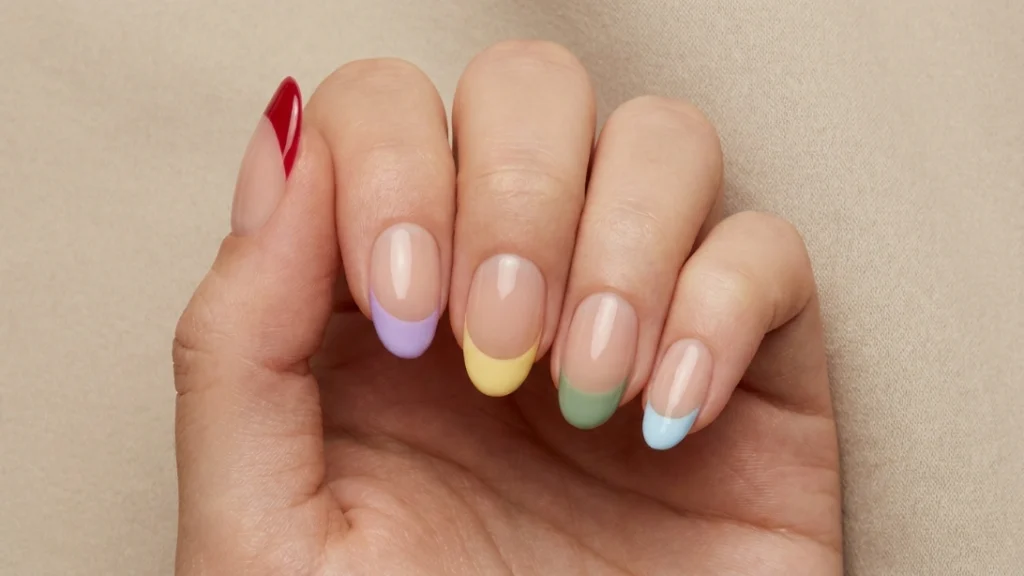
There is a reason the French manicure has never really left the building. It is the little black dress of the nail world, dependable enough for a job interview and dressy enough for a wedding. But somewhere between the milky nail wave and the return of maximalist color, colored french tips quietly became the update everyone actually wanted. Instead of swapping the whole manicure for something loud, you keep the shape people already trust and let one thin line of color do the talking.
That is the appeal of colored french tips in a sentence. You are not starting from scratch. You are borrowing a silhouette that already photographs well and giving it a personality shift. Below are five ways to wear colored french tips right now, along with the shade logic that keeps each one from looking accidental.
Why Colored French Tips Are Having a Real Moment
Full-coverage color asks a lot of a manicure. It has to match your mood, your outfit, and honestly your patience for touch-ups, since chips show fast on a solid color. A colored tip solves that problem by containing the color to a small, easily maintained edge. The sheer or nude base underneath does most of the visual work, so even a bold tip shade reads as considered rather than chaotic.
There is also a skin-tone argument worth making here, and it is one most roundup articles skip entirely. Because the tip sits closest to your fingertips, its undertone interacts directly with your own skin far more than a full-nail color does. Warm tip shades like coral, peach, and butter yellow tend to flatter warmer undertones, while cooler shades like lavender and icy blue lean toward cooler ones. Neutral tips in white or soft black sidestep the whole question, which is part of why classic French never fully goes out of style. Keeping that pairing in mind is the difference between a manicure that makes your hands look healthy and one that makes them look a touch washed out.
1. Cherry Red Tips on a Sheer Base
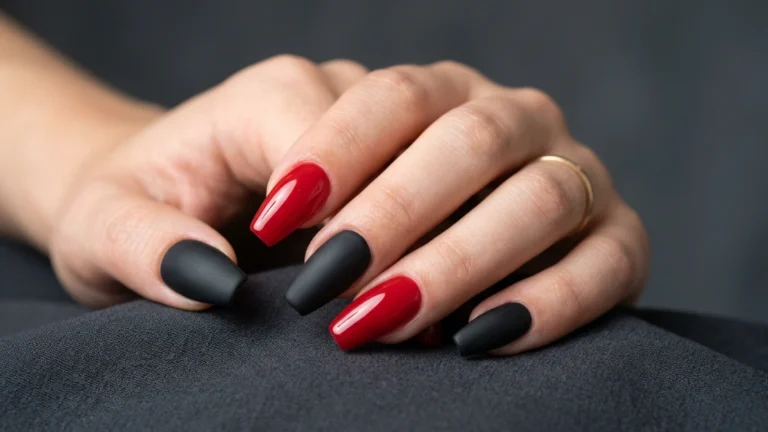
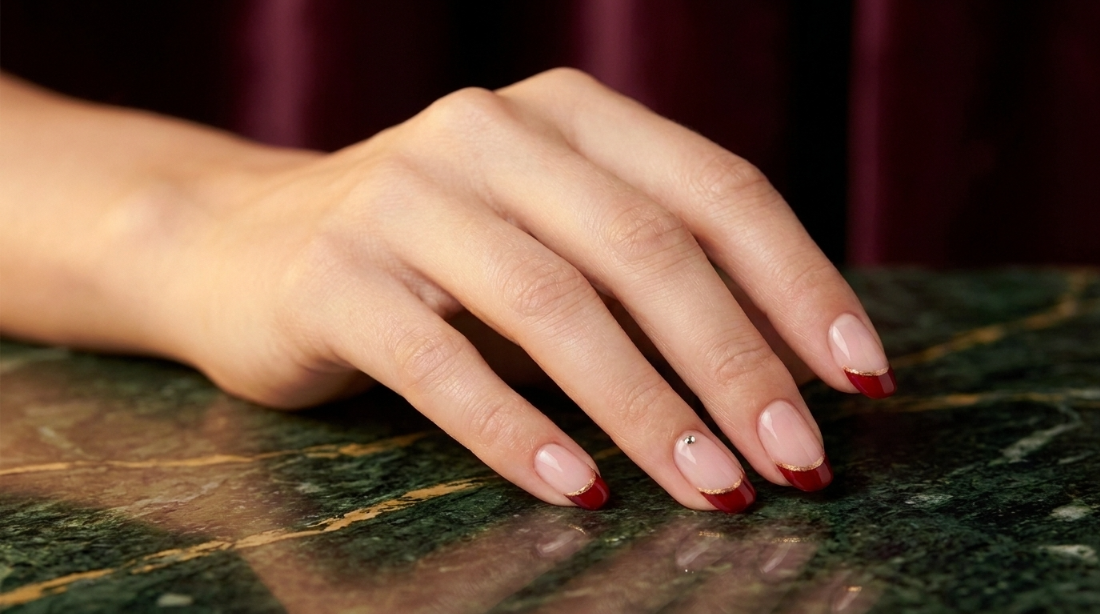
Swap the traditional white for a glossy cherry red and you get a manicure with real presence, without committing to a full red mani that shows every tiny chip. Keep the base sheer pink or barely-there nude so the red has room to pop rather than fight for attention. This version works especially well on a soft square or almond shape, since the straighter tip line gives the red edge a clean, graphic finish.
It is also the easiest of the five to wear into a professional setting. The red stays contained, the rest of the nail stays neutral, and the overall effect lands closer to polished than party.
2. Lavender Tips for a Quietly Cool Look
Lavender sits in that in-between zone that is neither fully purple nor fully grey, which is exactly why it reads as sophisticated rather than costume-y. It pairs beautifully with a clear or milky white base and looks just as good in the dead of winter as it does at a spring brunch. If your skin leans cool, this is one of the most flattering colored tip options on this whole list, and it photographs softly without ever looking washed out.
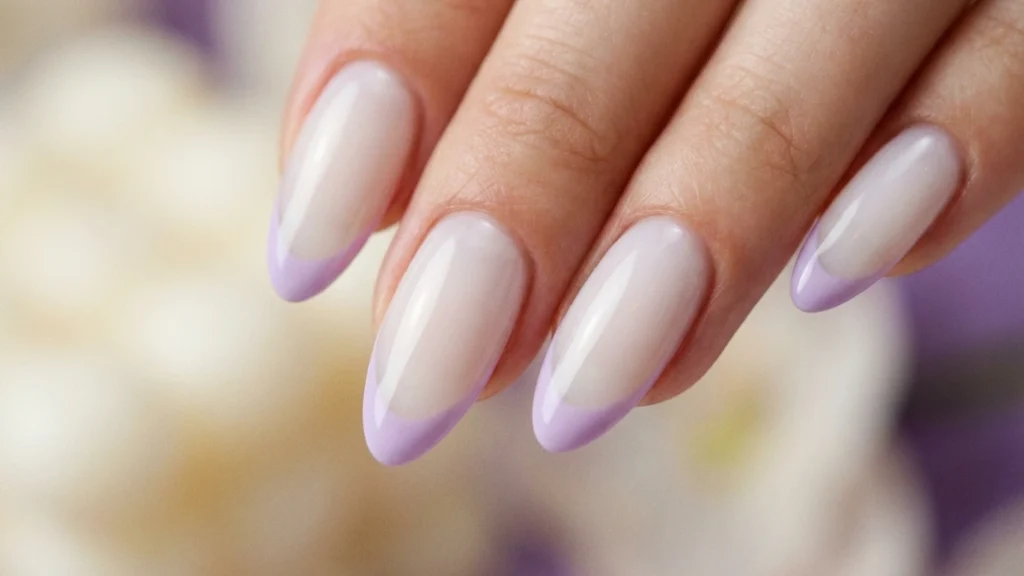
Lavender tips also happen to be forgiving on shorter nails, since the muted tone does not demand a long canvas to look intentional.
3. Buttery Yellow for a Softer Statement
The trending yellow right now is not neon and it is not mustard. It is a soft, almost creamy yellow that feels cheerful without shouting. This shade earns its keep on shorter nails cut into a clean round or square shape, paired with a clear or white base rather than nude, since the contrast between the two tones is really the whole point of this look.
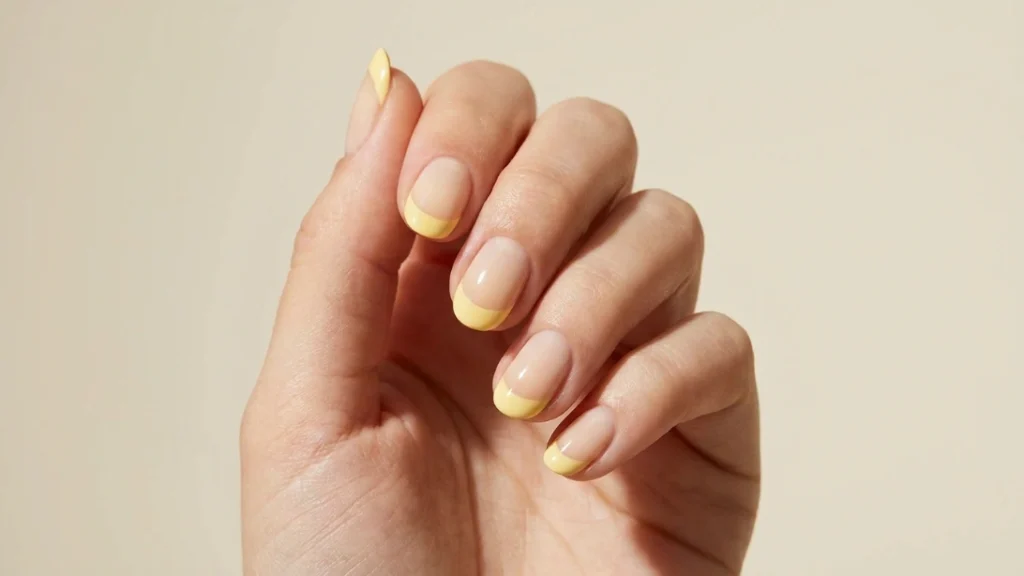
Buttery yellow tips are a nice entry point if you have always liked the idea of colored French but have been nervous about committing to something bold. It is playful, but it still behaves.
4. Sage Green for an Earthy, Grounded Twist
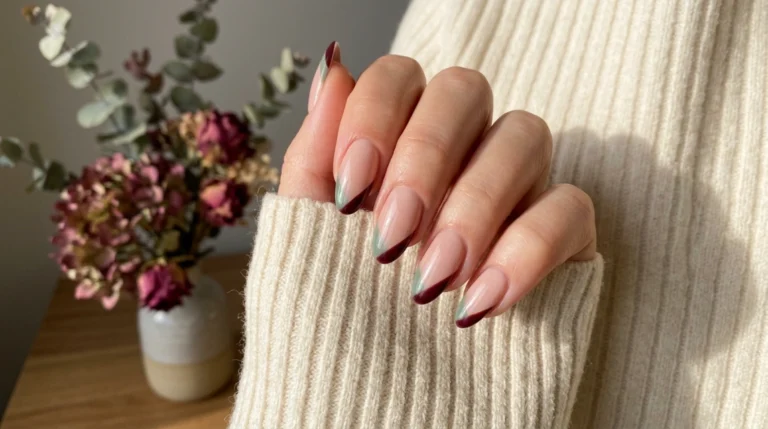
Sage sits at the crossroads of trend and timeless, and it is one of the easiest greens to wear because it leans muted rather than bright. Over a nude or soft beige base, sage tips feel autumnal without being a full-on fall color story, which means you can reasonably wear this one from late summer straight through the cooler months.
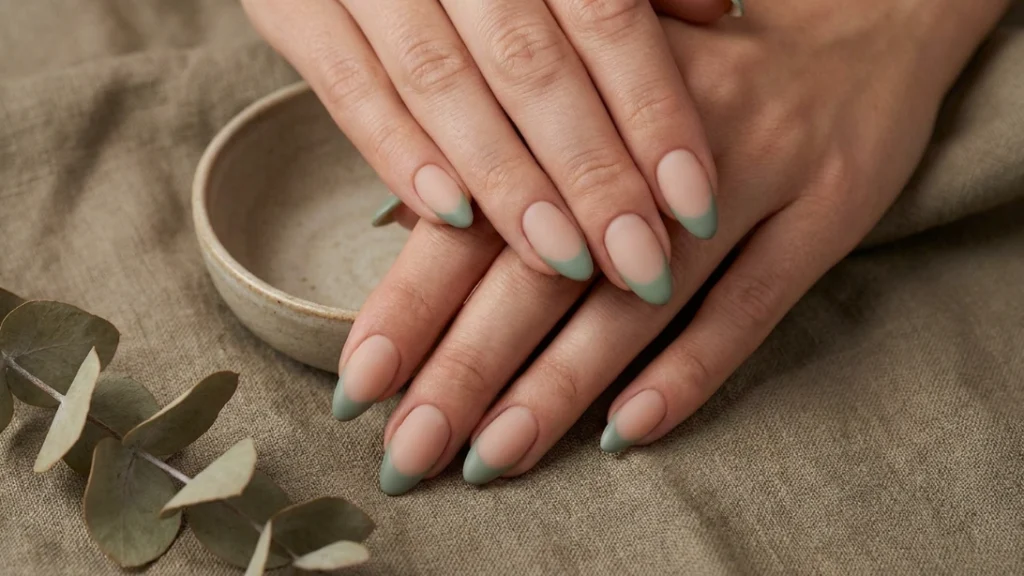
This shade also tends to suit a wider range of undertones than a true neon green would, since the grey cast in sage softens the contrast against skin.
5. Icy Blue for a Cool-Weather Classic
Icy blue tips have quietly become a cold-weather signature, showing up alongside silver-toned French and berry accents once the temperature drops. Against a milky or sheer base, the pale blue reads crisp and clean rather than cold in the unflattering sense. This is a strong option if you gravitate toward jewel tones but want something a little more restrained for daily wear.
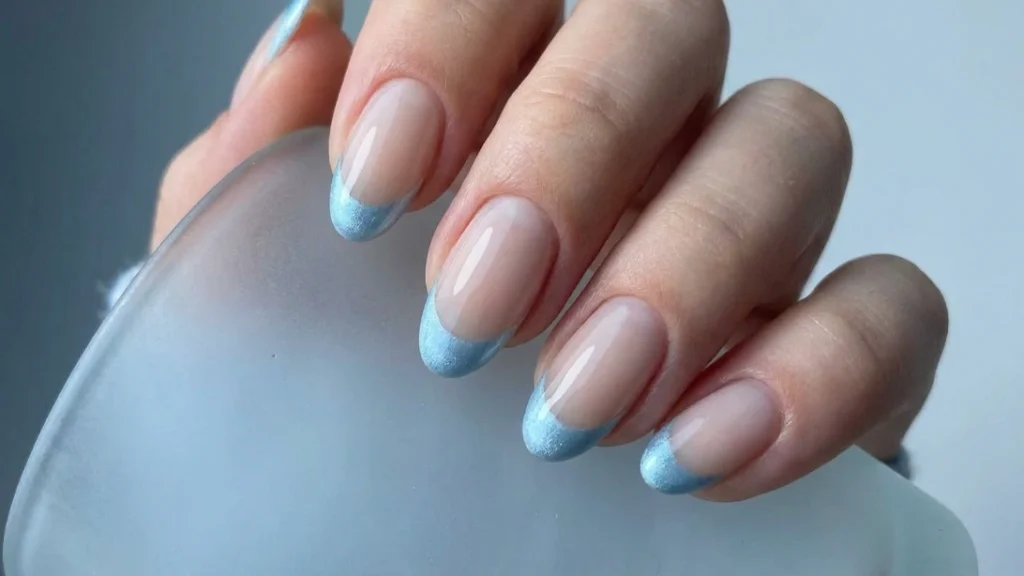
It is worth noting that icy blue looks noticeably different depending on the shape underneath it. On an almond shape, the elongated tip stretches the color into a slim line that feels elegant. On a shorter square shape, the same color reads a bit bolder and more graphic, so pick based on which effect you are actually after.
Matching Tip Color to Your Undertone
| Tip Color | Best For | Base Pairing |
|---|---|---|
| Cherry red | Warm or neutral undertones | Sheer pink or nude |
| Lavender | Cool undertones | Clear or milky white |
| Buttery yellow | Warm undertones | Clear or white |
| Sage green | Most undertones | Nude or soft beige |
| Icy blue | Cool undertones | Milky or sheer |
A quick rule of thumb that never fails: warm colors like coral, peach, and buttery yellow flatter warm undertones, cool colors like lavender and icy blue flatter cool undertones, and neutral tips in white or soft black play it safe across the board. Think of it the same way you would think about lipstick shopping. The wrong tip color can leave hands looking a shade paler than they actually are, while the right one makes skin look effortlessly even.
Getting the Line Clean at Home
A shaky tip line is the one thing that can make an otherwise great colored French look unfinished. French tip guide stickers solve most of this problem for beginners, since they give you a straight edge to paint up to instead of freehanding a curve. A thin, angled liner brush also makes a real difference, especially for the buttery yellow and sage looks above, where the tip line tends to be more delicate than a bold cherry red edge.
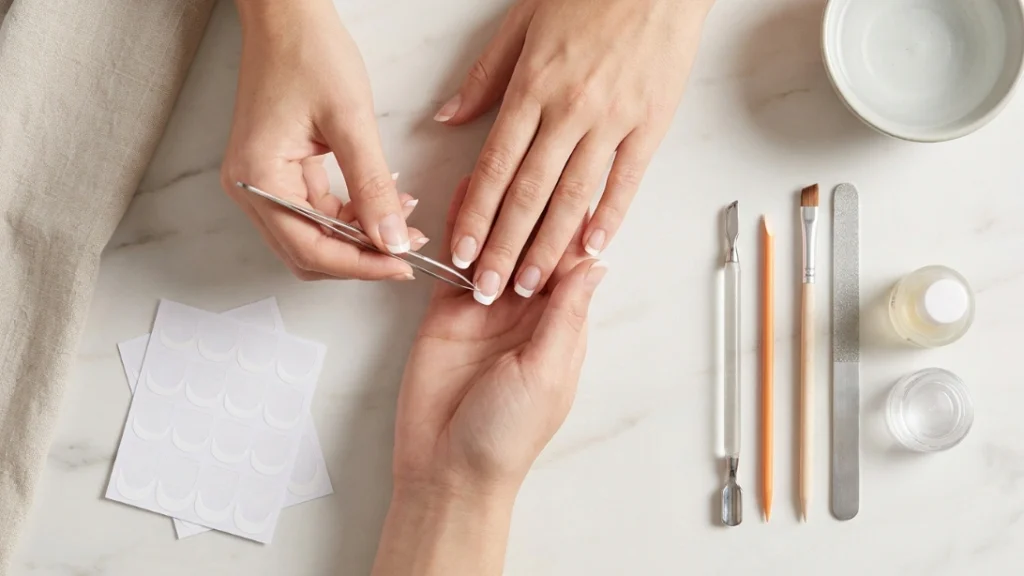
If you are new to the technique altogether, our full French manicure variations guide walks through several application methods in more depth, including reverse and micro French approaches that pair well with any of the five colors above.
A Few Honest Thoughts From Trial and Error With Colored French Tips
I went through three failed attempts at a lavender tip before I figured out that thinning the polish slightly with a drop of thinner made the line glide on far more evenly than straight from the bottle. It sounds like a small detail, but it was the actual fix, not a better brush or a steadier hand. If your tip color keeps coming out streaky, that is worth trying before you blame your technique.
Quick FAQ
Do colored French tips work on short nails? Yes, and in some ways they work even better on short nails, since a slimmer tip line looks proportionate on a shorter nail bed in a way a wide classic French sometimes does not.
What base color should I use under a colored tip? Sheer pink, nude, milky white, or clear are the most versatile choices, since they let the tip color stay the visual focus instead of competing with a strong base shade.
How long does a colored French manicure typically last? With gel polish, expect roughly two to three weeks before the tip line starts to grow out and lose its crisp edge, which is about the same timeline as a standard gel manicure.
According to the American Academy of Dermatology’s guidance on healthy nail care, keeping cuticles moisturized between manicures helps polish, including a colored French set, wear more evenly and chip less at the edges. Building that habit in alongside your usual nail care routine is a small step that pays off every time you sit down to repaint a tip line.