Chrome vs. Metallic Nails: Are They the Same Thing?
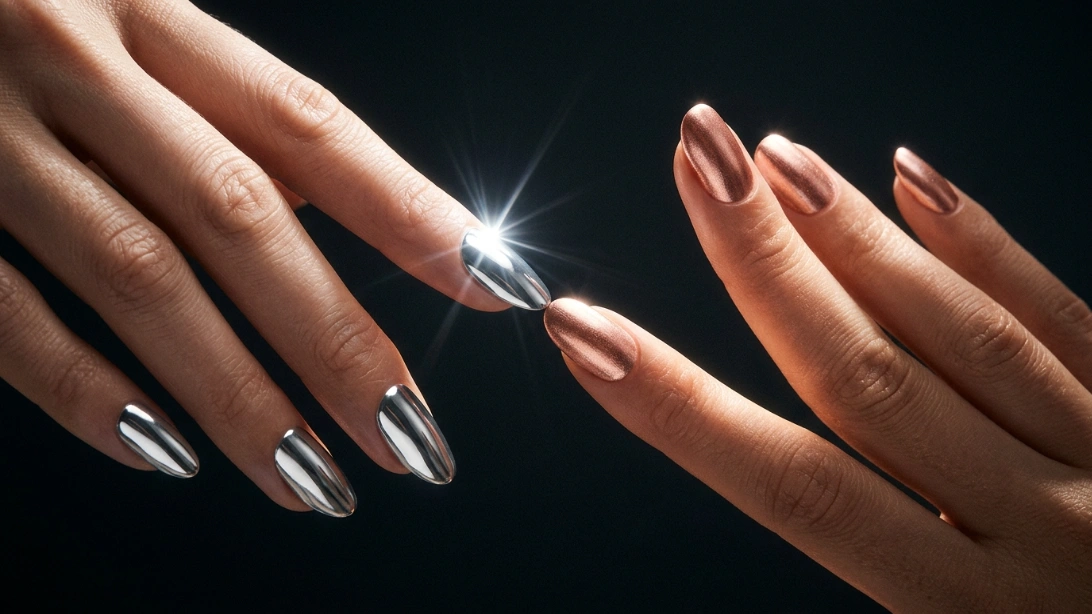
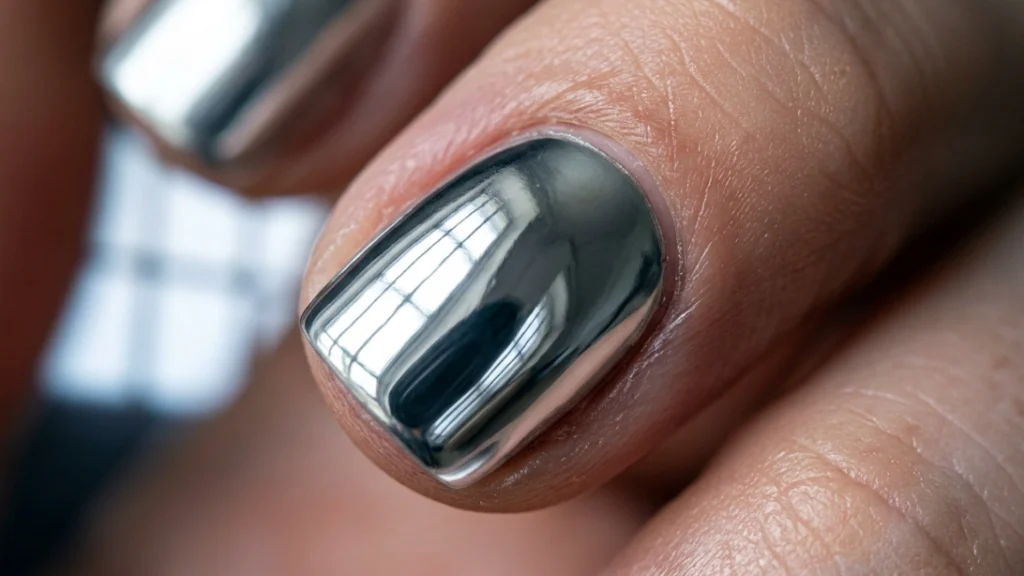
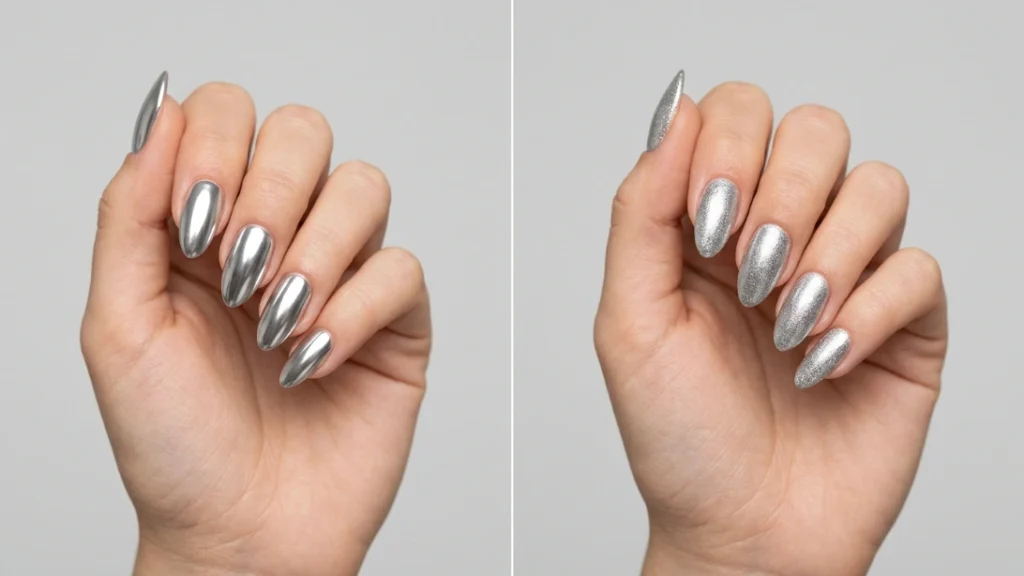
Hold your hand under a light and the answer to the chrome vs metallic nails question becomes obvious in about two seconds. Chrome nails throw back a single, sharp reflection, like looking into a mirror or the hood of a freshly waxed car.
Metallic nails do something softer, a shimmer that moves and catches light from several directions at once, closer to the way a gold necklace glints than the way an actual mirror behaves.
Chrome vs metallic nails isn’t a case of two names for the same finish. It’s two genuinely different physical effects, and once you understand why they look different, you’ll never confuse them again.
The One-Paragraph Science Behind Both Finishes
Chrome gets its mirror effect from ultra-fine metallic particles, usually aluminum or mica, that lie flat and parallel to the nail’s surface once applied. That uniform alignment is what makes light bounce back in a single, concentrated direction, the exact mechanism behind any mirror.
Metallic polish uses similar metallic particles, but they’re suspended loosely throughout a regular polish formula rather than aligned flat, so light scatters off them from many different angles at once.
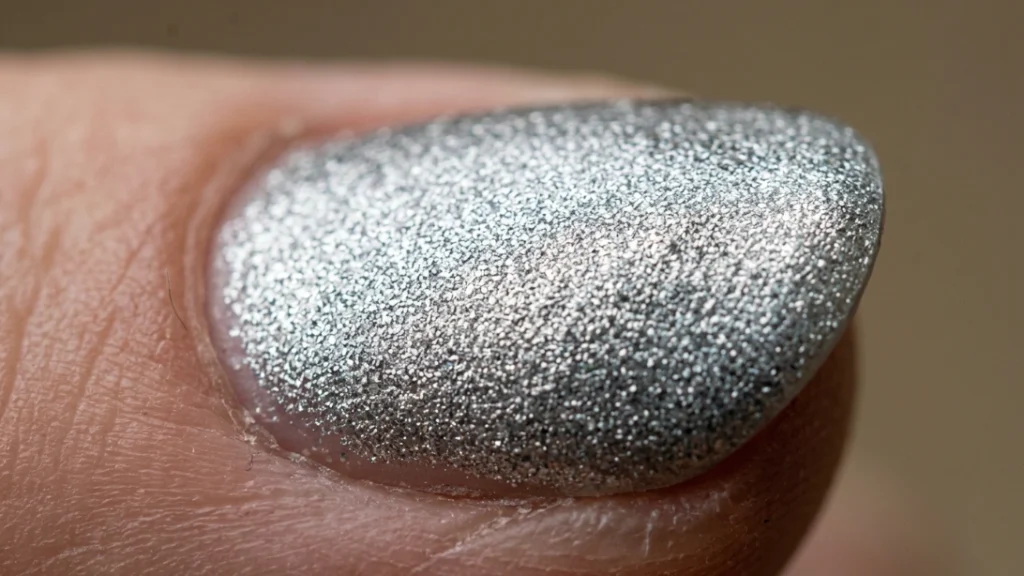
That scattering is what produces a shimmer instead of a reflection. Same basic ingredient, fundamentally different physical arrangement, and that arrangement is the entire reason one looks like glass and the other looks like glitter’s more grown-up cousin.
How Each One Is Actually Applied
Chrome requires a gel polish base cured under a UV or LED lamp, followed by the chrome pigment buffed or brushed directly onto the tacky, uncured top layer, then sealed with a final top coat. Every layer in that sequence needs proper curing for the mirror effect to set correctly, which makes chrome meaningfully more involved than a standard manicure.
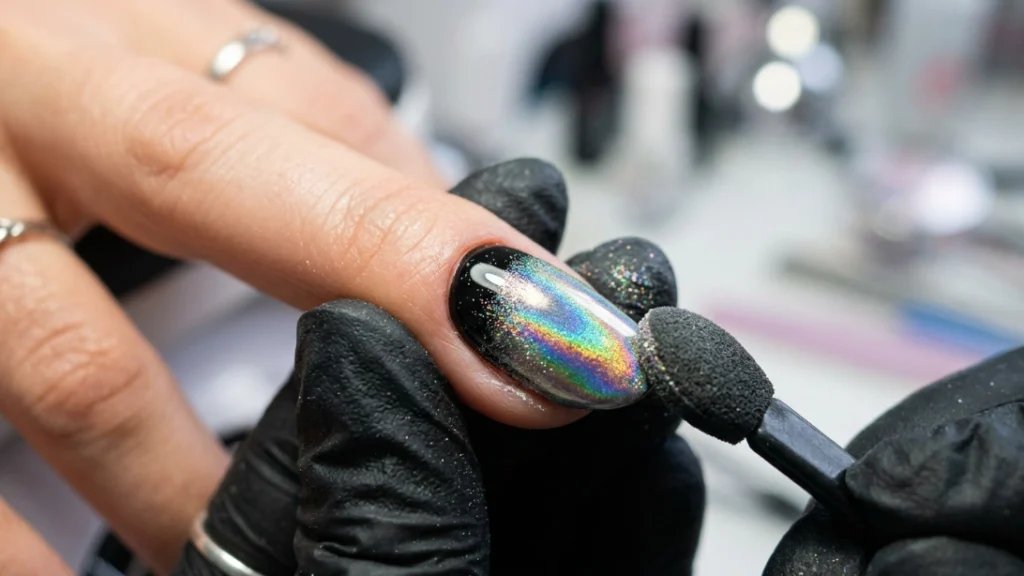
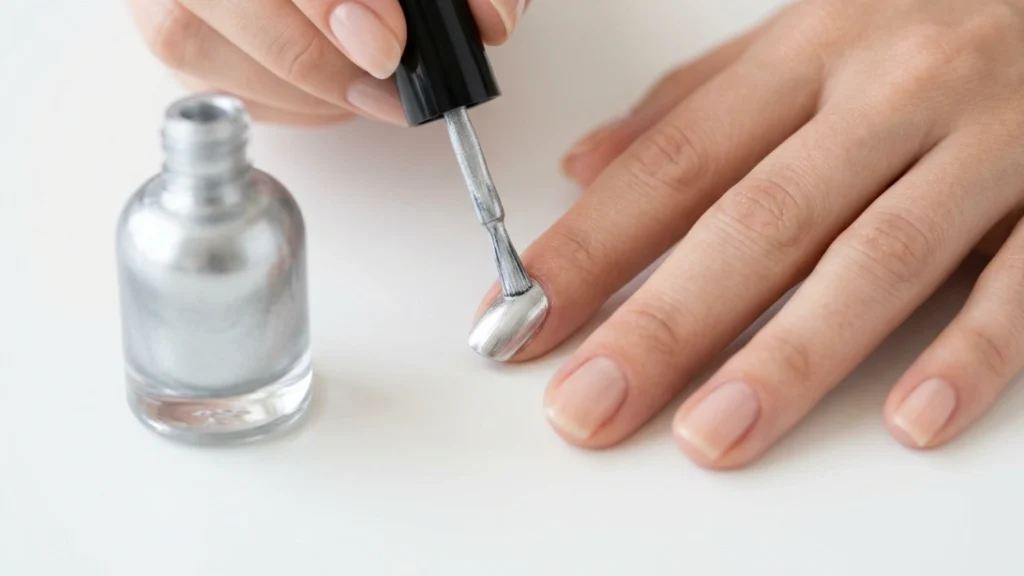
Metallic nail polish, by comparison, applies exactly like any other polish straight from the bottle, no gel base required, no lamp, no powder step. This is the biggest practical difference between the two for anyone deciding which one to try at home: chrome is a technique, metallic is just a formula.
Which One Actually Lasts Longer?
Chrome, applied properly over a cured gel base, typically holds its mirror finish for two to three weeks, similar to any other gel manicure’s wear time. Metallic polish, since it’s regular lacquer rather than a gel system, wears more like standard nail polish, generally five to seven days before chipping starts to show. If longevity matters more to you than the specific finish, that gap alone might settle the decision on its own.
Does Chrome Work Over Any Color, or Only Certain Bases?
This is a detail most comparisons skip, and it matters if you’re deciding between the two for a specific look. Chrome powder can technically go over any cured gel color, but it reads most dramatically over black or a very dark base, since the mirror effect has maximum contrast to work with. Over white or pale colors, chrome still creates a reflective finish, but it reads as a softer, more pearlescent shimmer rather than the sharp liquid-metal look most people picture when they hear the word chrome.
Metallic polish doesn’t have this same base-color dependency. Because the shimmer comes from particles scattered throughout the polish itself rather than a separate reflective layer, a metallic gold or rose gold polish looks essentially the same regardless of what, if anything, sits underneath it. This is one more reason metallic tends to feel like the lower-effort, more predictable option of the two.
Which One Fits Which Occasion?
Chrome tends to read as bolder and more dramatic, the kind of finish that photographs beautifully under event lighting and reads as a genuine statement rather than a background detail. It suits a night out, a festival look, or anywhere you want your hands to actually catch attention.

Metallic sits closer to a classic, versatile shine, dressy enough for an evening out but understated enough for daily wear or the office, which makes it the more flexible everyday option of the two.

Chrome or Metallic: The Quick Decision
Choose chrome if: you want the most dramatic, true mirror effect, you’re prepping for a specific event or photo-heavy occasion, and you don’t mind the extra salon time or at-home effort the gel-based process requires.
Choose metallic if: you want an easy, no-fuss polish you can apply straight from the bottle, you change your color often, or you’re looking for something versatile enough to wear daily without a whole system behind it.
Neither is a lesser version of the other. Chrome and metallic are built around different physics entirely, mirror versus shimmer, which is exactly why the chrome vs metallic nails comparison isn’t really about which one is “better” so much as which effect you’re actually after.
Quick FAQ
Is chrome just a more expensive version of metallic polish? No, they’re built on entirely different mechanisms, not different price points of the same idea. Chrome’s mirror effect comes from aligned metallic particles over a gel base, while metallic polish’s shimmer comes from particles scattered through regular lacquer, a genuine technical difference, not a quality tier.
Can you get a chrome look without gel polish? Not really, at least not the true mirror effect. Chrome powder needs a cured gel base to grip onto and set correctly. Some brands market “chrome-effect” regular polishes, but these generally land closer to a strong metallic shimmer than an actual mirror finish.
Does chrome or metallic show wear faster? Metallic tends to show wear sooner simply because it wears like standard polish, typically five to seven days before chipping. Chrome, backed by a gel base, usually holds its finish for the same two to three weeks you’d expect from any gel manicure.
Our full chrome nails guide covers the complete at-home chrome application technique in more depth, and if you’re weighing this against an even bolder finish, our color ideas section explores how chrome pairs with specific shade families.
According to Wikipedia’s overview of nail polish composition, different finish effects, glossy, matte, shimmer, and metallic, all come from variations in the particles suspended within the same basic polish formula, which is part of why chrome and metallic can look so different despite sharing similar base ingredients.





One Comment