Press-On Nails vs. Acrylics: Which Actually Lasts Longer?
Ask this question in a salon and you’ll get a confident, one-word answer: acrylics. Ask it in a Reddit thread full of people who’ve actually tracked their spending over a year, and the answer gets a lot less confident. Press on nails vs acrylics isn’t really one comparison, it’s two, and most articles only ever run the first one, which is exactly why this question keeps generating so much conflicting advice online.
The first comparison is simple: which one, worn once, survives longer before it lifts, chips, or pops off. The second comparison is the one that actually matters for your wallet and your calendar: which one gives you more total wear over time, once you factor in reusability, appointment frequency, and how often you’re realistically willing to redo either one. This article runs both.
Round One: Raw Durability, Straight Up
If you’re purely asking which material physically holds up longest in a single continuous wear, the press on nails vs acrylics comparison isn’t close. Acrylics win.
A properly applied acrylic set, bonded directly to the natural nail and maintained with a fill every two to three weeks, can realistically continue for months without ever being fully removed. Press-ons, even high-quality ones, top out at roughly one to two weeks per application with nail glue, and considerably less, often just three to seven days, with adhesive tabs instead.
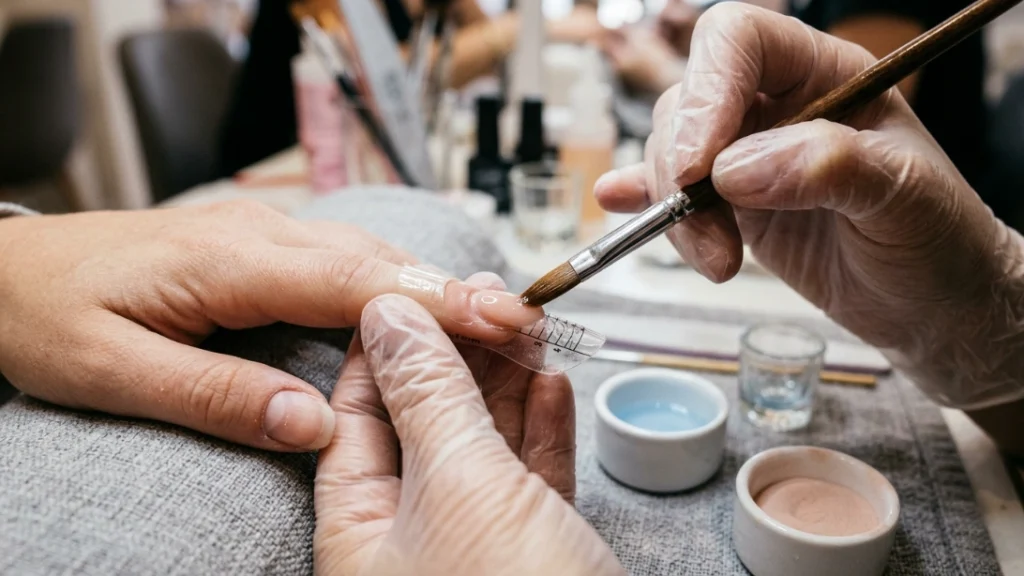
The reason comes down to the chemistry, not the skill of whoever’s applying either one. Acrylic cures into a hard, chemically bonded shell directly on the nail plate. Press-ons rely on an adhesive layer holding a separate, pre-formed piece in place, which is a fundamentally weaker bond than a cured chemical structure, no matter how good the glue is.
If your only question is “which one, worn once, lasts the longest before I have to think about it again,” acrylics answer that question decisively.
Round Two: Total Wear, Cost, and Reusability
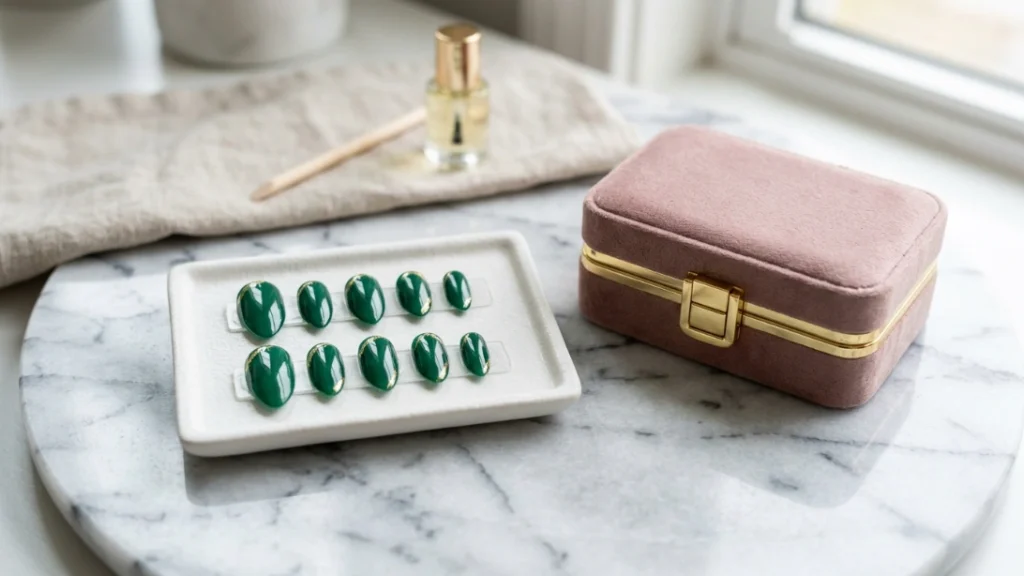
Here’s where the press on nails vs acrylics story gets more interesting, and where most comparisons stop too early. Press-on sets, removed carefully rather than picked off, are genuinely reusable, typically three to five wears before the shape and adhesive surface wear down enough to affect the fit. That changes the actual math considerably.
A single press-on set worn five separate times adds up to real cumulative wear time that starts to close the gap with a single acrylic set’s continuous run, even though no individual press-on wear lasts as long on its own.
Cost follows a similar pattern. Acrylics involve a real and repeating salon cost, both the initial set and every fill after it, while a press-on set is a one-time purchase that can be reused multiple times before it needs replacing.
Neither option is universally cheaper once you actually track the numbers over a full year, it depends heavily on how often you’re getting acrylic fills versus how many wears you’re actually getting out of a single press-on set before it degrades.
What About Nail Health in the Press On Nails vs Acrylics Debate?
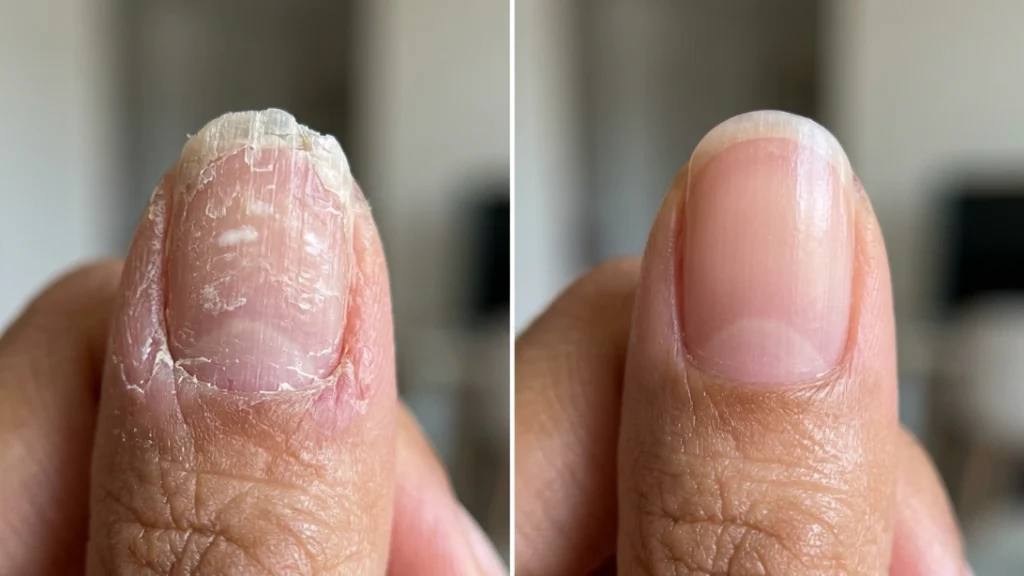
This is the category where the two options diverge most sharply, and it’s worth being honest about it rather than glossing over it. Acrylic application involves roughening the natural nail’s surface so the product has something to grip onto, and removal typically involves an acetone soak plus some filing.
Repeated over months and years, that cycle is the reason so many long-term acrylic wearers eventually deal with thin, weakened natural nails that take real time to grow back out to full strength.
Press-ons, when applied with adhesive tabs and removed gently rather than pried off, generally leave the natural nail surface untouched. Even glue-based press-on application, done correctly with proper acetone removal rather than picking, tends to be gentler on the nail plate over time than the surface-roughening cycle acrylic requires.
If long-term nail health is your actual priority rather than maximum single-wear durability, this is the category that should weigh most heavily in your decision.
Application Time and Convenience
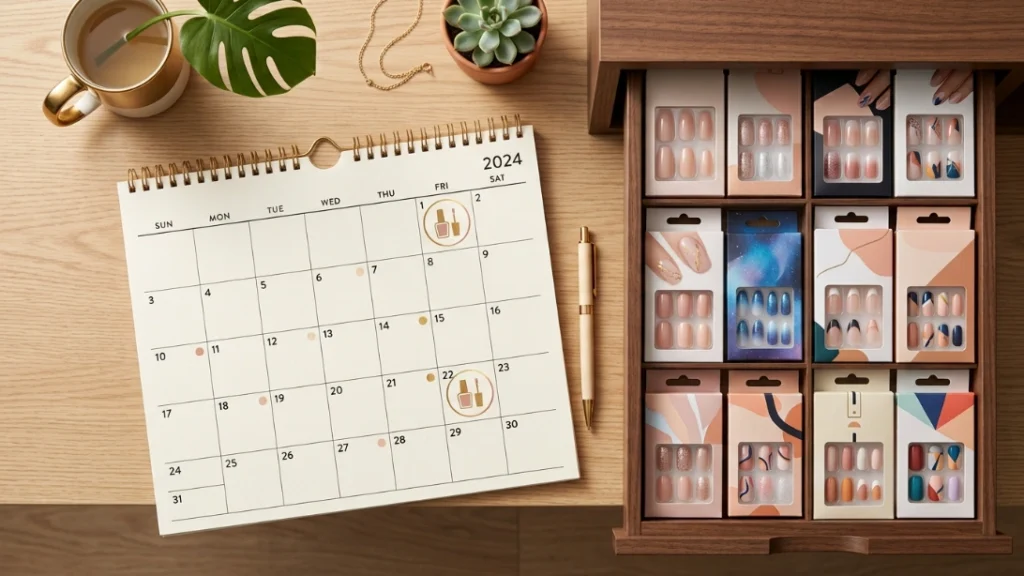
Press-ons win this round clearly. A full set typically goes on in fifteen to thirty minutes at home, no appointment, no drying time beyond the adhesive setting, and no drive to a salon. Acrylics require a salon visit that commonly runs an hour or more, plus the ongoing commitment of booking a fill every two to three weeks to keep the set looking fresh rather than growing out unevenly.
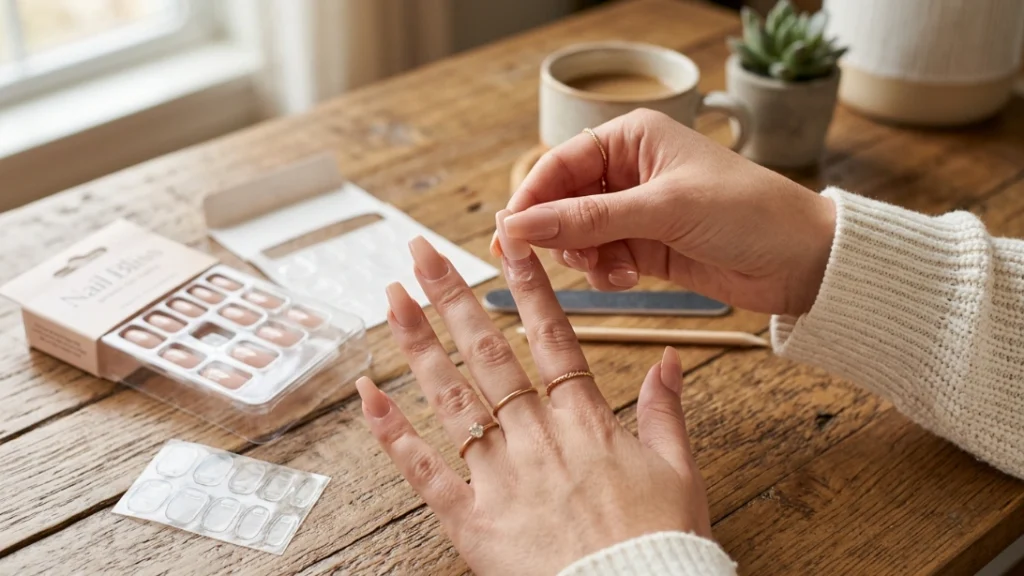
If your schedule doesn’t easily accommodate recurring salon appointments, or you simply want to change your nail look more often than a three-week acrylic cycle allows, press-ons offer a flexibility that acrylics structurally can’t match.
Does Shape Choice Change the Outcome?
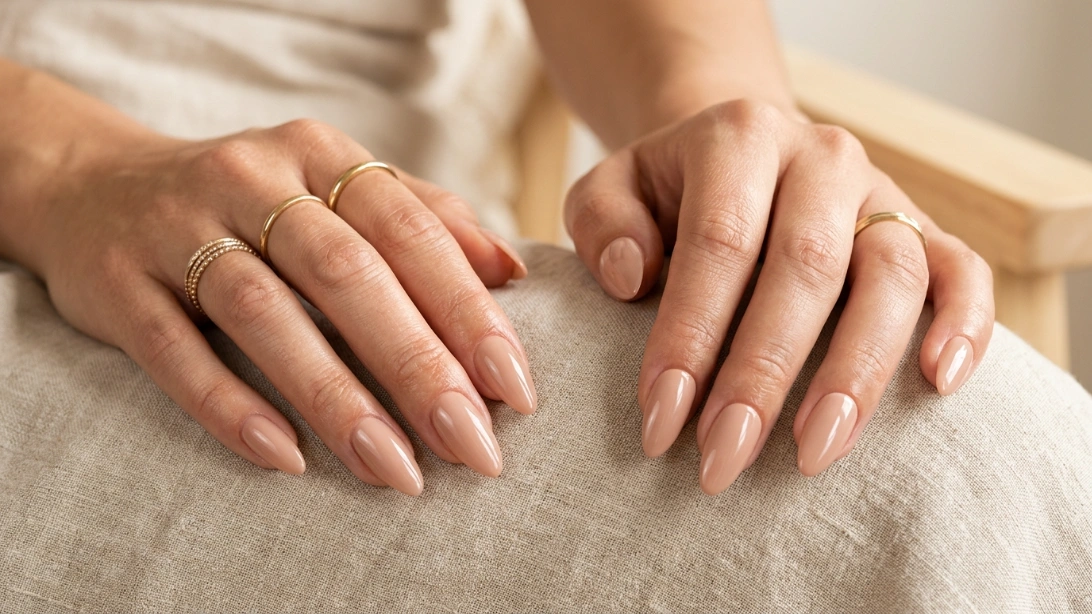
Shape plays a bigger role in this decision than most comparisons mention. Longer, more dramatic shapes like stiletto or long coffin put more physical stress on whatever material is holding them together, which tends to expose the weaker adhesive bond of a press-on faster than it would with a shorter, more moderate length. Acrylic’s chemical bond handles that added length and leverage more reliably, which is part of why salons often steer longer extension requests toward acrylic rather than press-ons in the first place.
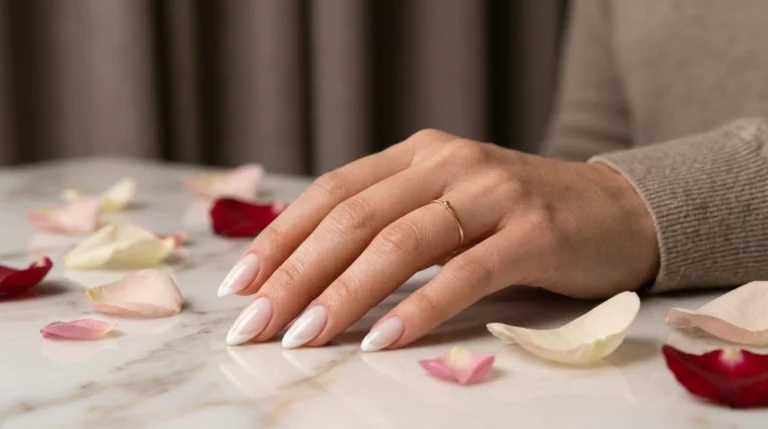
If you’re set on trying press-ons but want them to genuinely compete with acrylic on durability, sticking to a shorter or medium length, almond, square, or short coffin, gives the adhesive far less leverage to fight against, and meaningfully closes the durability gap between the two options.
So Which One Actually Lasts Longer?
The honest answer depends on which question you’re actually asking. For raw, single-wear durability, acrylics last longer, full stop. For total wear across the life of a reusable set, weighed against cost and the toll on your natural nails, press-ons hold up a lot better than their per-wear numbers suggest on their own.
Choose acrylics if: you need guaranteed, uninterrupted durability for a specific stretch of time, a wedding, a vacation, a season where you don’t want to think about your nails at all, and you’re comfortable with the ongoing salon commitment and cumulative impact on your natural nails that comes with it.
Choose press-ons if: you want flexibility to change your look often, you’d rather protect your natural nail’s long-term health, and you’re willing to apply and remove them properly, rather than picking or prying, to get the full reusable value out of each set.
A Quick Note on Application Quality
Nearly every downside attributed to either option gets worse with rushed or improper technique. A press-on set applied without proper nail prep will loosen faster than the one to two week average suggests.
An acrylic set removed by picking rather than soaking causes far more damage than a properly soaked-off set ever would. Whichever option you choose, the actual technique behind application and removal affects the outcome as much as the material itself does.
According to the American Academy of Dermatology’s guidance on manicures, proper removal technique is one of the most significant factors in long-term nail health, regardless of which nail enhancement method you’re removing.
Our acrylic nails guide covers the technique side of that comparison in more depth, and our nail care tips page has more on protecting your natural nails between sets of either kind.