Coffin Nails 101: Shape Guide for First-Timers
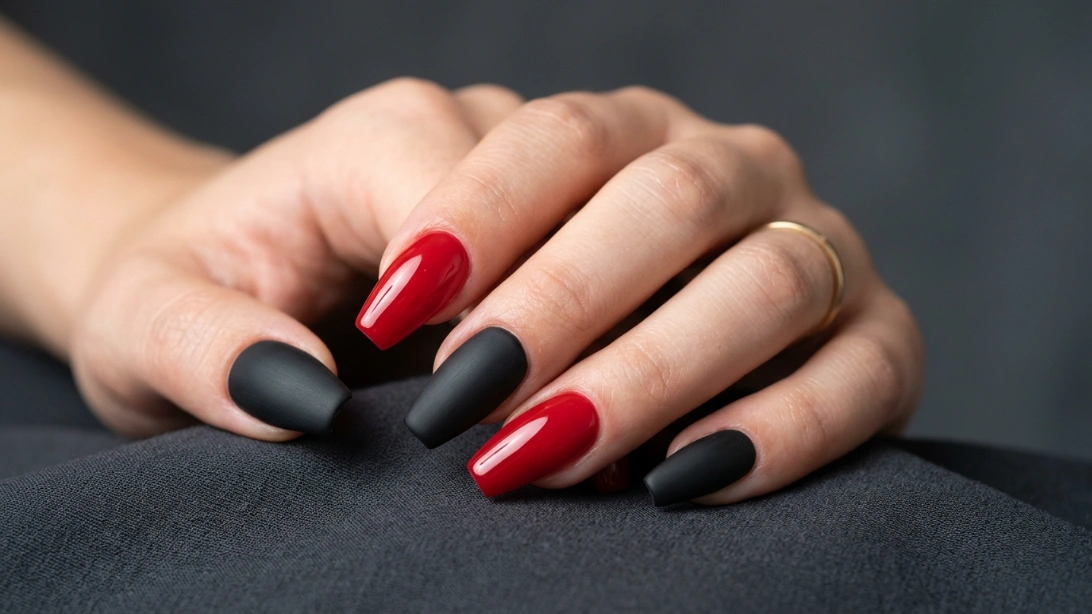
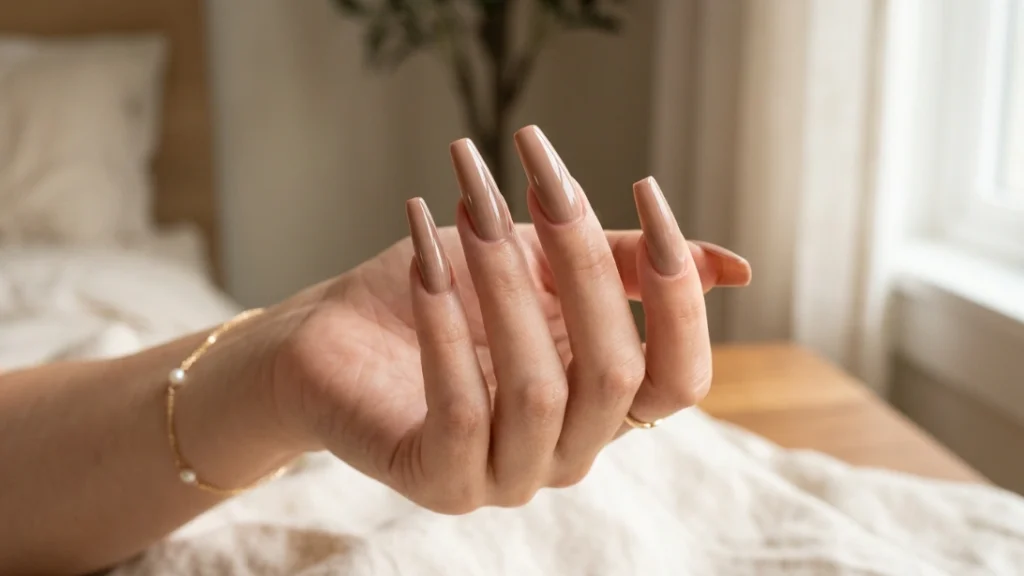
Coffin nails, sometimes called ballerina nails because the shape resembles a ballet slipper, are tapered along the sides and finished with a flat, squared-off tip instead of a rounded or pointed one. That’s the whole definition in one sentence. Everything else worth knowing before your first set comes down to whether that particular silhouette actually suits your hands, your lifestyle, and your patience for upkeep, which is exactly what this guide is built to answer honestly.
Most coffin nail content online jumps straight to design inspiration without ever addressing whether you should get the shape in the first place. This coffin nails for beginners guide is the step before that step.
10 Things to Know Before Your First Coffin Nails for Beginners Appointment
1. It needs some length to actually work. The tapered sides and flat tip that define coffin nails need real surface area to read clearly. Very short natural nails can technically be shaped this way, but the effect is subtle enough that most first-timers add length through gel or acrylic extensions to see the shape properly.
2. It suits long, slender fingers most naturally, but it isn’t limited to them. Coffin flatters long fingers with almost no adjustment needed. On shorter or wider fingers, it still works well, it just needs a slightly shorter, more moderate length to stay proportional rather than overwhelming the hand.
3. The taper does real visual work on wider nail beds. Because the sides narrow inward before flattening at the tip, coffin nails can make a wider nail bed look slimmer, similar to how almond does, just with a more structured, squared-off finish at the end.
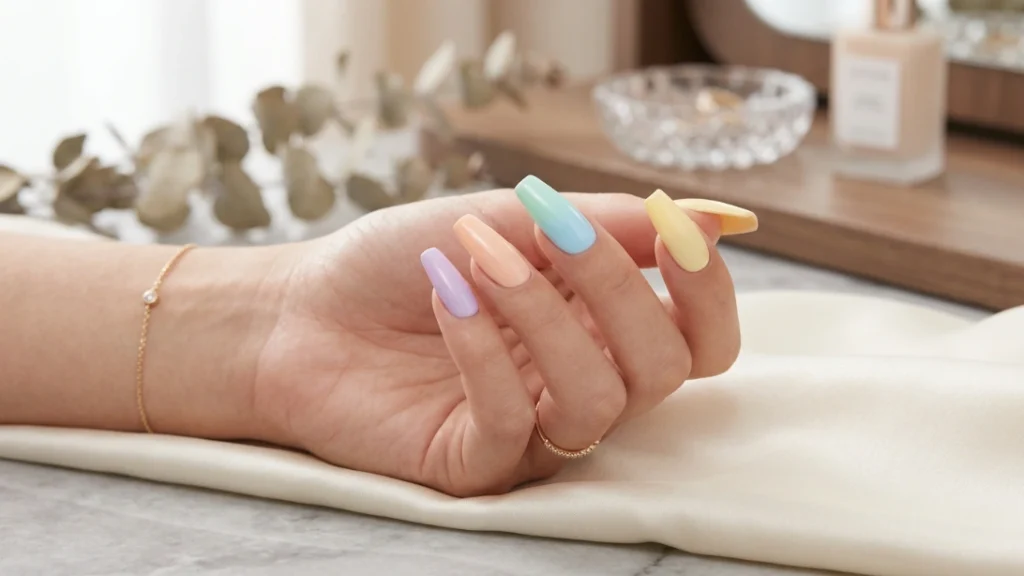
4. It’s more forgiving than a pointed shape, less forgiving than a rounded one. The flat tip gives you more margin for small filing errors than a sharp almond point would, but there’s still more nail edge exposed than a soft round or squoval shape, which matters if you’re hard on your hands during the day.
5. Almost any nail type can wear it, with the right expectations. Acrylic and gel extensions are the most common route since they provide the length and structure the shape wants. Strong, healthy natural nails can be filed into a coffin shape too, just with a shorter, more moderate outline and a bit more care to avoid weakening the free edge.
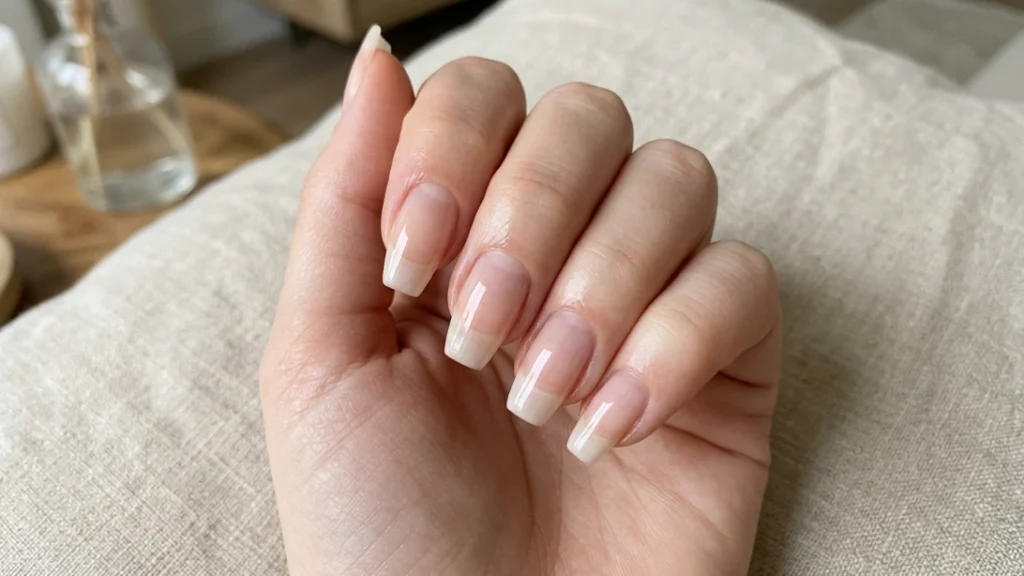
6. Maintenance sits in the moderate range. Coffin isn’t the lowest-maintenance shape you can choose, that title belongs to round or squoval, but it’s also not the highest upkeep either. Expect a fill or reshape every two to three weeks if you’re wearing it on extensions, similar to most other extended shapes.
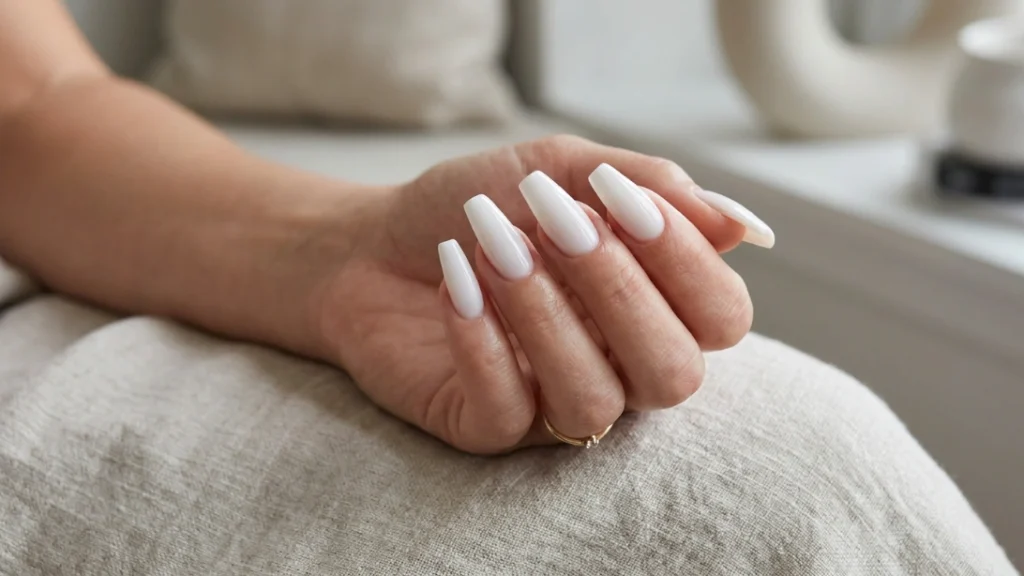
7. The finish, matte or glossy, changes the whole personality of the shape. A glossy coffin set reads polished and classic. The same exact shape in a matte finish reads more modern and editorial. Neither is more “correct,” it’s purely a styling choice worth thinking about before your appointment.
8. It’s one of the most versatile canvases for nail art. The flat, wide tip gives more usable surface area than a tapered point does, which is part of why French tips, negative space designs, and fine line art all tend to look especially clean on this shape specifically.
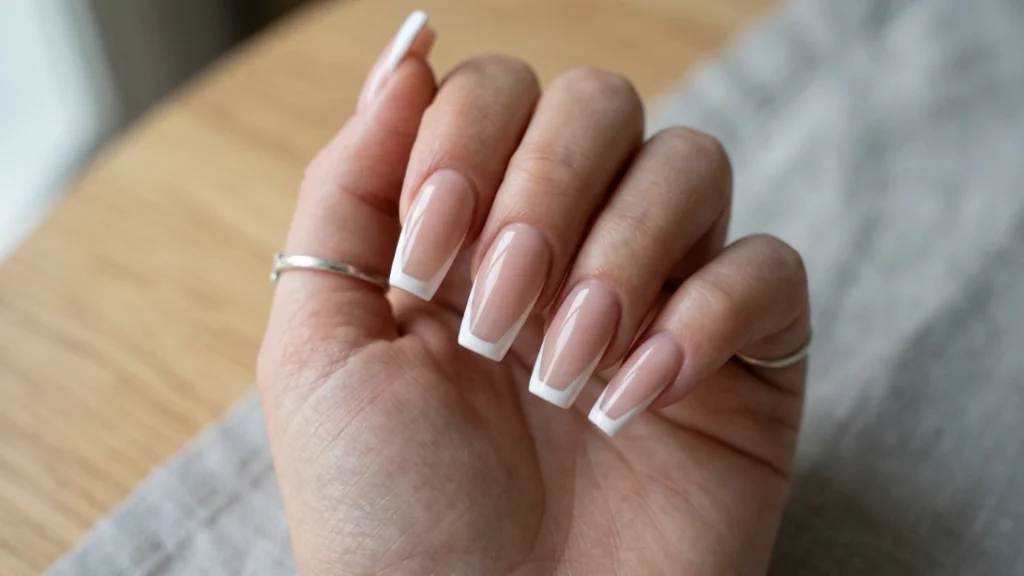
9. Filing technique matters more here than on simpler shapes. Getting symmetrical tapered sides that match on both hands takes more attention than filing a simple round or square edge. This is genuinely one of the harder shapes to get right freehand at home on a first attempt, though far from impossible with patience.
10. It’s not going anywhere as a trend. Unlike a seasonal color or a viral one-off look, coffin has held its position as one of the most consistently requested shapes in salons for several years running. This is a shape choice you can commit to without worrying it’ll feel dated in six months.
Coffin vs. Almond: The Comparison Most Beginners Actually Need
Almond and coffin get compared constantly, and for good reason, they’re often the two shapes a first-timer is actually choosing between. Almond tapers all the way to a soft, rounded point, which reads as more delicate and universally flattering across different hand types. Coffin keeps that same tapered logic but stops short of a point, flattening off instead, which reads as bolder and more structured.
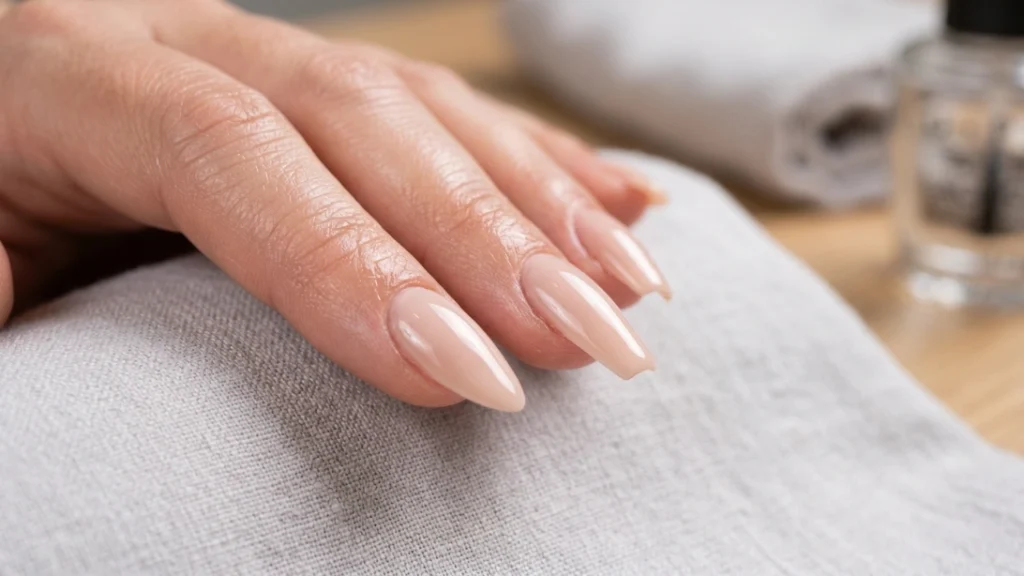
If you want the most broadly flattering, lowest-risk option and you’re still unsure about committing to a stronger silhouette, almond is the safer starting point. If you already know you want something with a bit more edge and personality, and your fingers are on the longer or wider side, coffin is worth choosing directly rather than working up to it.
The Honest Pros and Cons
Pros:
- Genuinely versatile with color, finish, and nail art
- Flattering on a wide range of hand and finger types when the length is chosen thoughtfully
- Reads as both classic and current depending on how it’s styled
- Widely requested, so nearly every tech can execute it well
Cons:
- Needs some length to look intentional, which usually means extensions for most people
- Harder to file symmetrically at home than a simpler round or square shape
- Sits in moderate maintenance territory, not the lowest-upkeep option available
- The flat tip corners can occasionally catch on fabric or hair more than a fully rounded edge would
Filing Coffin Nails at Home, If You Want to Try It Yourself
Start with clean, dry nails and a length you’re comfortable working with. File the sides in gently, angling slightly inward rather than straight across, working toward the center on both edges evenly.
Once the taper is established, square off the tip with light, even strokes rather than one aggressive pass, checking both hands periodically to keep the shape matched. A glass or fine-grit file causes less splitting at the edges than a coarse emery board, which matters more on this shape since there’s a flat corner on each side that can catch and chip if the filing is uneven.
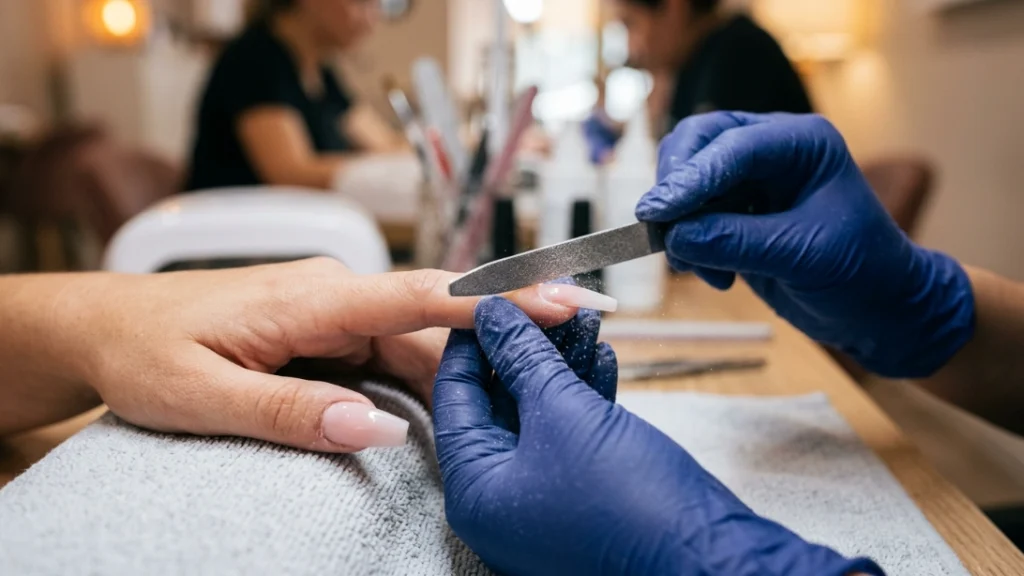
If your first attempt doesn’t come out perfectly symmetrical, that’s genuinely normal for coffin nails for beginners. This is one of the harder shapes to nail freehand on a first try, and most people improve noticeably by their second or third attempt.
Quick FAQ
Do coffin nails ruin your natural nails? Coffin itself doesn’t damage nails any more than other shapes do. The real risk comes from over-filing or from rushed, picked-off removal if you’re wearing the shape on acrylic or gel extensions, not from the shape’s geometry.
Can you get coffin nails on short natural nails? Yes, though the tapered, flat-tip effect reads much more subtly at a short length. Most people wanting the full visual effect of the shape add some length through gel or acrylic rather than relying on very short natural nails alone.
Is coffin or almond better for beginners? Almond is generally the more forgiving, broadly flattering starting shape if you’re brand new to extensions or shaped nails in general. Coffin nails for beginners work best as a great next step once you know you want something bolder, or a fine first choice if you already have longer or wider fingers it suits particularly well.
If you’re weighing this shape against a softer alternative, our almond nails guide covers that comparison shape in more depth, and if you’re planning to get this shape done in acrylic specifically, our coffin acrylic nails for beginners guide walks through exactly what to say at your appointment.
According to Wikipedia’s overview of the acrylate polymers used in acrylic nail systems, the same underlying material science applies regardless of which shape you choose, which is worth knowing if you’re deciding between a natural coffin shape and an extension-based one.