Mismatched Nail Designs for School-Going Teens
Matching all ten nails used to be the whole point of a manicure. Not anymore. Pinterest’s official 2026 trend report named “Glitchy Glam” one of its top beauty predictions for the year, built entirely around deliberate irregularity, and mismatched nail designs sit right at the center of it. Search interest for “nails with different colors on each hand” climbed 125 percent, and searches tied to the broader avant-garde, mismatched beauty look rose as much as 270 percent. For teens heading back to school this year, that shift is showing up everywhere from lockers to lunch tables.
The good news is that mismatched doesn’t mean messy. There’s an actual method behind the nails that look intentionally curated rather than like ten random polishes grabbed off a shelf, and once you know it, this trend becomes one of the easiest, most personal looks to pull off at home.
What Mismatched Actually Means
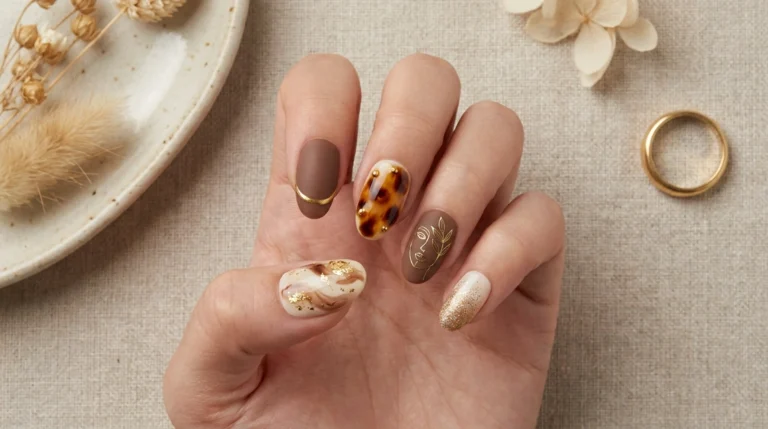
Mismatched nail designs for teens aren’t about throwing every color and pattern you own onto one hand and hoping it works. The nails that actually look good use a genuine connecting thread, one repeated color, one shared finish, or one consistent color family, running through every nail even though the individual designs are all different. That thread is what separates a curated, deliberate look from something that just reads as chaotic.
Think of it less like picking ten unrelated colors and more like picking one color story, then letting each nail interpret that story a little differently. A polka dot nail, a striped nail, a French tip, and a plain nail can all coexist beautifully as long as they’re all built around the same base shade.
The Simple Rule That Makes This Work
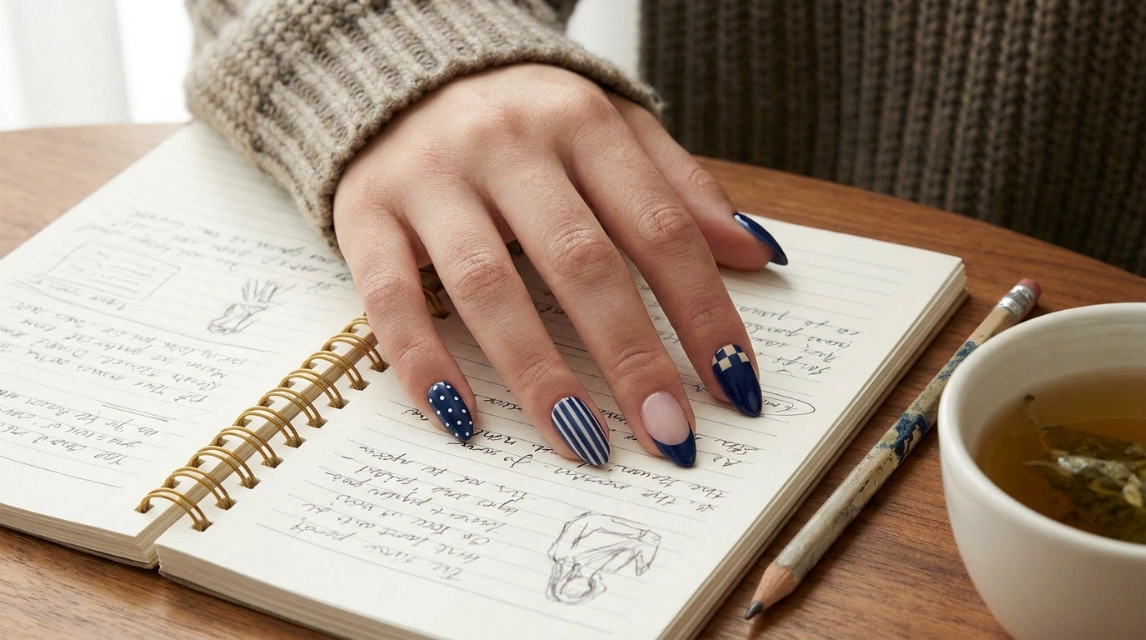
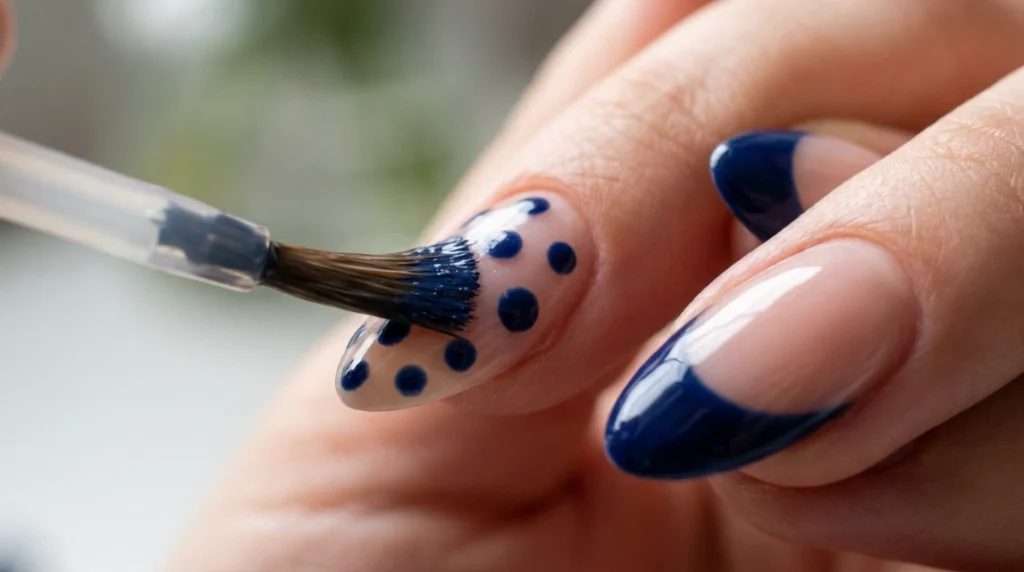
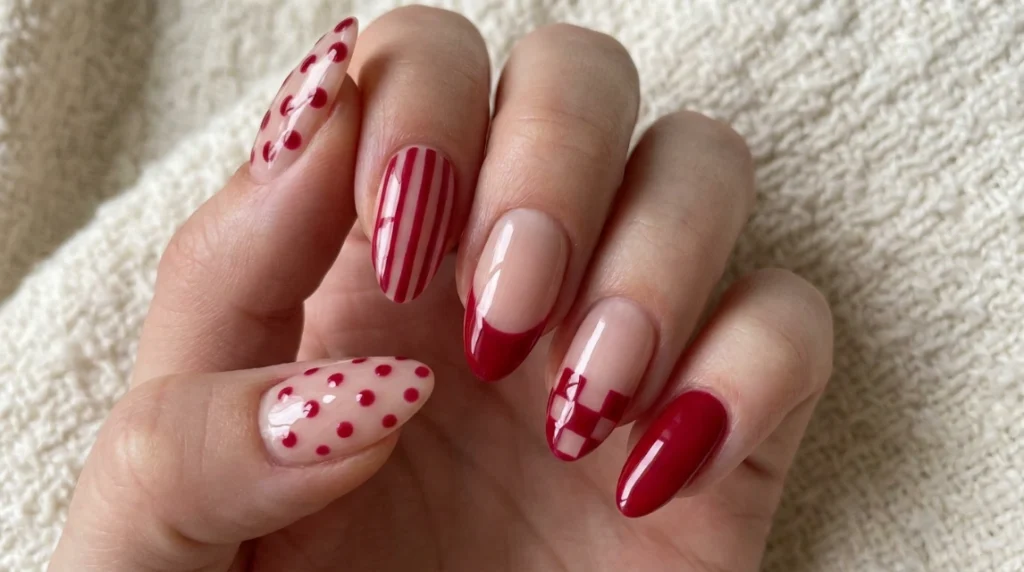
Pick one color, then give every nail a different design using that same color as the throughline. A navy base could show up as a French tip on one nail, polka dots on another, thin stripes on a third, and a solid color on the rest. Because the color repeats, the whole set reads as intentional, even though no two nails match exactly.
This is genuinely the easiest entry point into mismatched nails, and it’s the version that photographs best for a school setting specifically, since it looks put-together rather than experimental for its own sake.
Five School-Friendly Mismatched Ideas
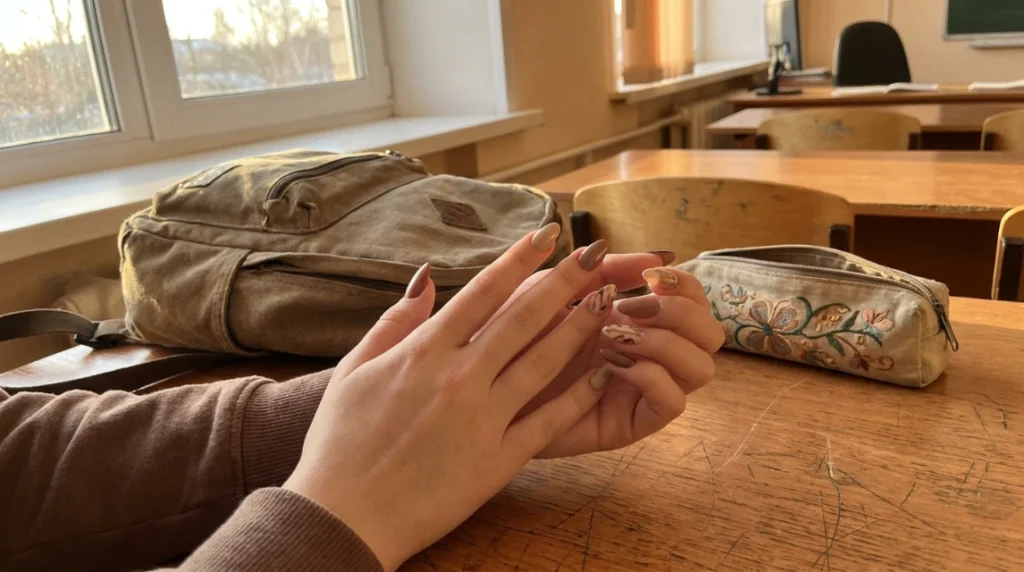
The one-color, five-design set. Choose a single shade, brown, navy, cherry red, or sage green all work well, and give each nail a different simple design using that color: dots, thin stripes, a French tip, a checkerboard corner, and one plain nail. This is the most versatile version of the trend and the one most likely to survive a full school day.
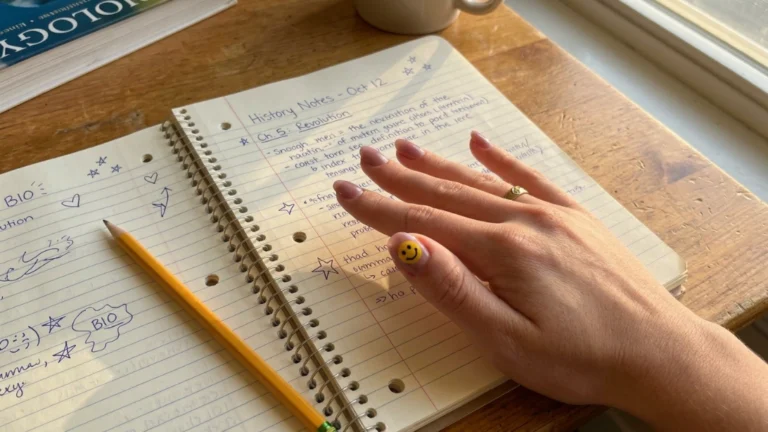
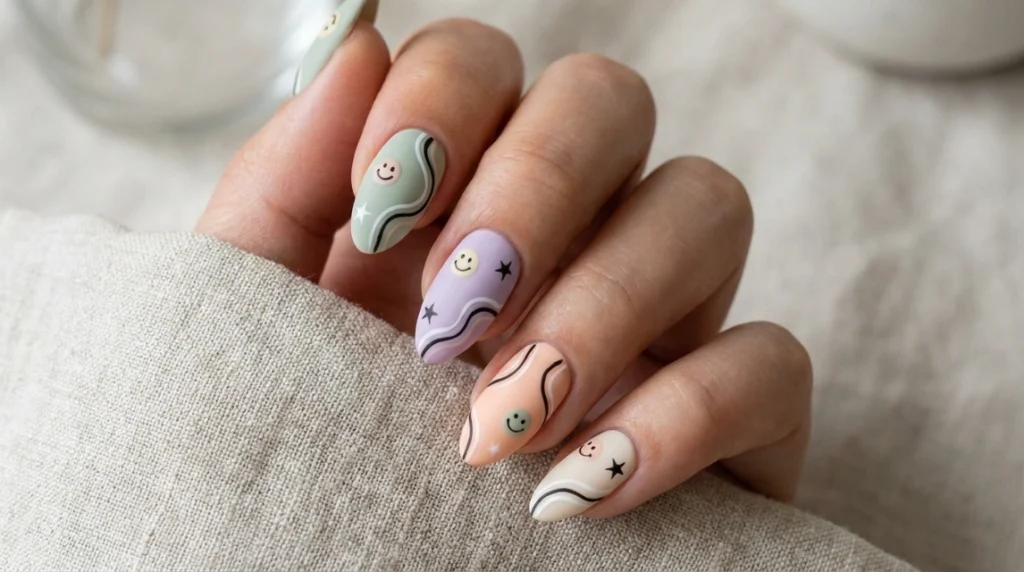
Retro doodles on a pastel palette. Small smiley faces, wavy lines, and tiny checkered corners across different fingers, kept to three or four coordinating pastel shades like sage, lavender, peach, and cream, so the mix reads as playful rather than cluttered.
Two-tone by hand. Rather than mixing every nail on both hands, keep one hand entirely in one color and the other hand in a second, complementary shade. This version delivers the “different colors on each hand” look that’s driving so much of the current search interest, while staying simple enough to execute quickly.
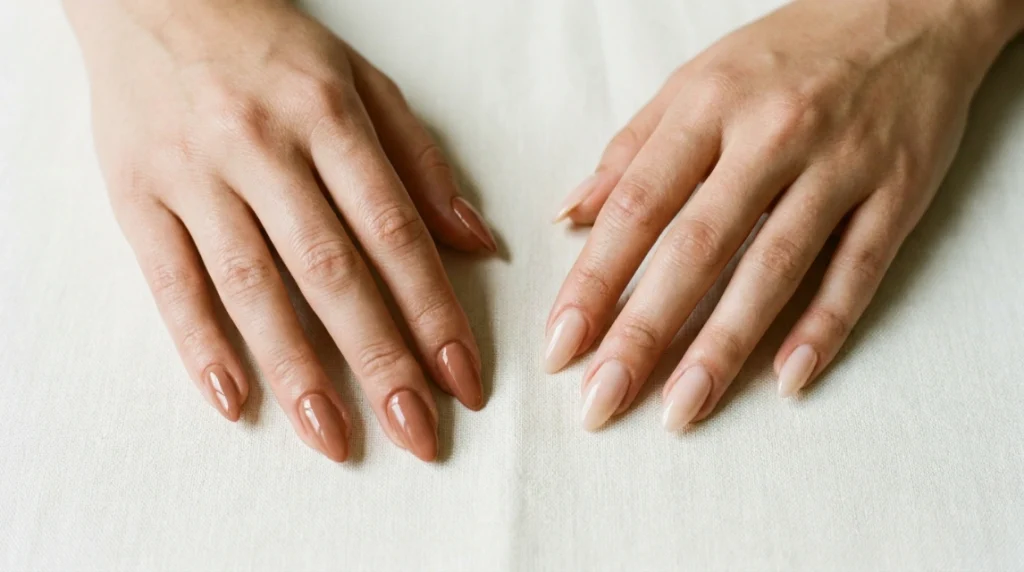
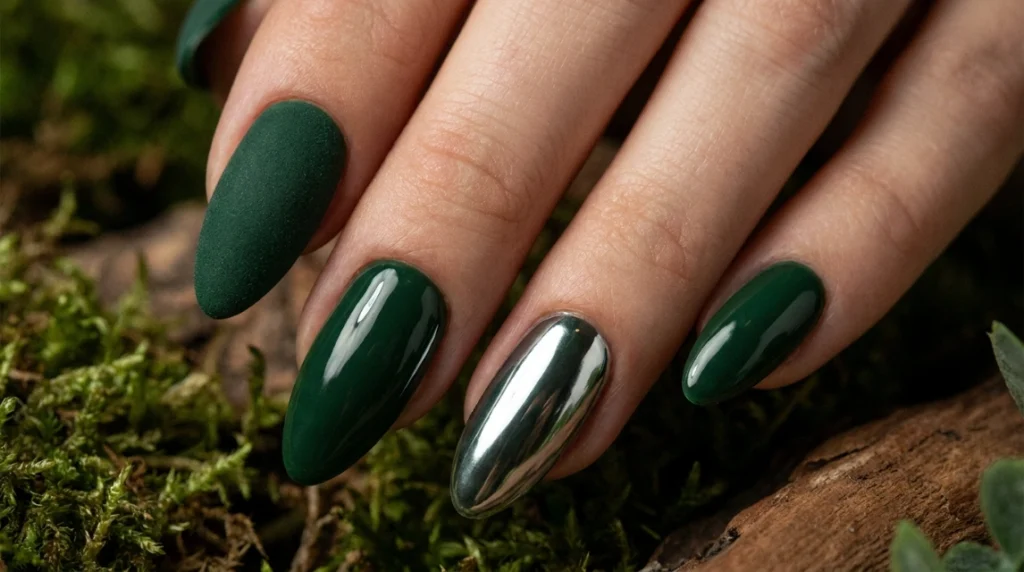
Texture mismatch, same color. Keep every nail the exact same shade, but alternate the finish, matte on some nails, glossy on others, with one chrome or shimmer accent nail thrown in. This is a quieter, more subtle take on mismatching that still reads as current without needing multiple colors at all.
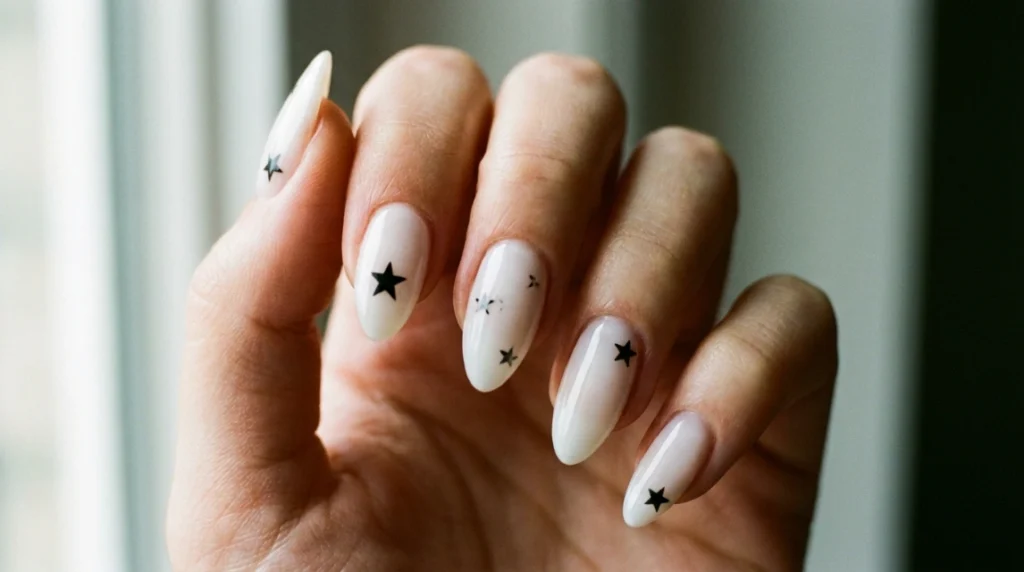
Pattern rotation on a neutral base. Start with a shared neutral, milky white, soft nude, or pale gray, then rotate a single motif across different nails in a slightly different size or placement each time, a small heart here, a tiny star there, a thin line somewhere else. The repetition of one motif across a shared base keeps things cohesive even as the placement changes nail to nail.
Keeping It Genuinely School-Appropriate
Because mismatched nails can range from subtle to fairly bold, it’s worth thinking about where your specific school’s dress code sits before committing to the louder end of this trend. Sticking to a coordinated color palette rather than a full rainbow of unrelated shades, keeping designs flat rather than raised or 3D, and choosing a shorter, rounded or squoval shape all keep this trend firmly on the wearable, low-risk side of things. If you want to test the idea before committing to a full mismatched set, starting with just two or three nails mismatched and the rest left solid is a genuinely easy way to try the trend without going all in on day one.
Does This Trend Work on Short Nails Too?
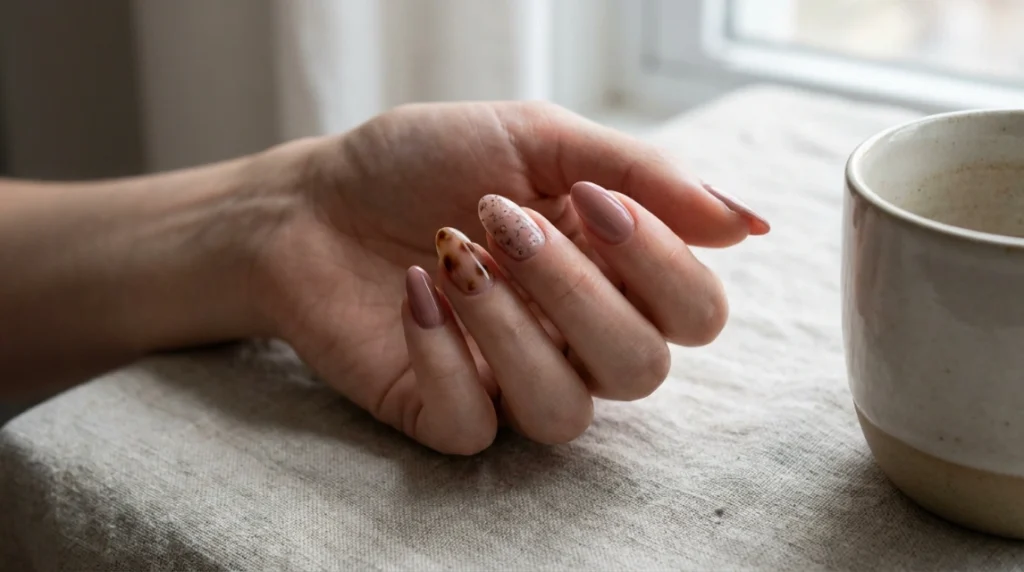
Yes, and it’s arguably easier to pull off well on shorter nails than long ones. A smaller canvas naturally limits how much detail fits on each nail, which keeps every individual design simple almost by default, dots, thin stripes, a small French tip, exactly the kind of minimal patterns that make mismatched nail designs for teens read as coordinated rather than overloaded. Longer nails can absolutely wear this trend too, they just give you more room per nail, so it takes a bit more discipline to keep each design simple enough that the set still feels cohesive.
Why This Trend Feels Different From Past Nail Trends
Recent nail trends leaned heavily toward uniformity, the same milky shade or the same clean, minimal look across every nail. Mismatched nail designs for teens represent a real departure from that, less about following one prescribed look and more about building something that feels personal. According to Pinterest’s official 2026 trend prediction for Glitchy Glam, the shift reflects a broader move toward individuality and self-curation over strict replication, which is part of why this particular trend has resonated so strongly with a younger audience specifically.
Quick FAQ
Do mismatched nails look unprofessional or too chaotic for school? Not when they’re built around a shared color or theme. A coordinated mismatched set reads as deliberate and put-together, while the version that looks chaotic is usually one without any connecting thread tying the nails together.
How many nails should actually be different in a mismatched set? There’s no fixed rule, but starting with two or three mismatched nails and keeping the rest solid is an easier entry point than mismatching all ten at once, especially for a first attempt.
Do mismatched nails take longer to do than a regular manicure? Slightly, since each nail involves its own small design, but keeping every design simple, dots, stripes, one plain nail, keeps the total time close to a standard at-home manicure.
What’s the easiest way to start with this trend? Pick one color you already own, then give each nail a different simple pattern using only that color. It’s the lowest-effort way to try mismatched nails while still looking coordinated.
If you’d rather ease into personality-driven nail art gradually, our subtle nail art for school guide covers a quieter, single-accent approach that pairs naturally with this trend. For more back to school nail inspiration overall, our Back to School Nails category has more seasonal ideas, and our Nail Art category covers more of the individual techniques, dots, stripes, French tips, that make up a mismatched set.